Published in Market trends
Golf properties in Spain: where lifestyle, tourism and prime real estate meet
Golf properties in Spain are attracting luxury buyers seeking privacy, space, year-round lifestyle and long-term residential appeal.

- Blog
- Articles
- Market trends
- Golf properties in Spain: where...
Golf has always been part of Spain’s luxury lifestyle proposition, but its relevance to the property market is becoming harder to ignore. Recent analysis from the Cátedra Real Estate Alfil at San Telmo Business School, reported by Vida Económica, found that 27% of golf tourists go on to buy a home in Spain, compared with 5.7% of conventional international tourists. The same analysis estimates that golf tourism generates around €16 billion in economic impact, with more than 1.4 million annual visitors and around 133,000 associated jobs.
That matters because golf is not just a leisure activity. It creates a deeper relationship with place. Golf visitors often stay longer, return more frequently and become familiar with the surrounding restaurants, schools, wellness facilities, airports and local communities. In a prime market increasingly shaped by lifestyle and scarcity, that makes golf properties particularly interesting.
The wider 2026 context supports that reading. In the first quarter of 2026, Registradores reported that foreign buyers accounted for 13.92% of home purchases in Spain, reaching just under 24,800 transactions. The highest foreign-buyer shares were recorded in many of Spain’s best-known lifestyle and coastal markets, including the Balearic Islands, the Valencian Community, Andalusia, Alicante, Málaga and Girona. At the same time, Ministry of Housing figures showed that average house prices in Spain reached €2,315.7 per square metre in Q1 2026, up 13.9% year-on-year, with particular pressure in high-demand locations.
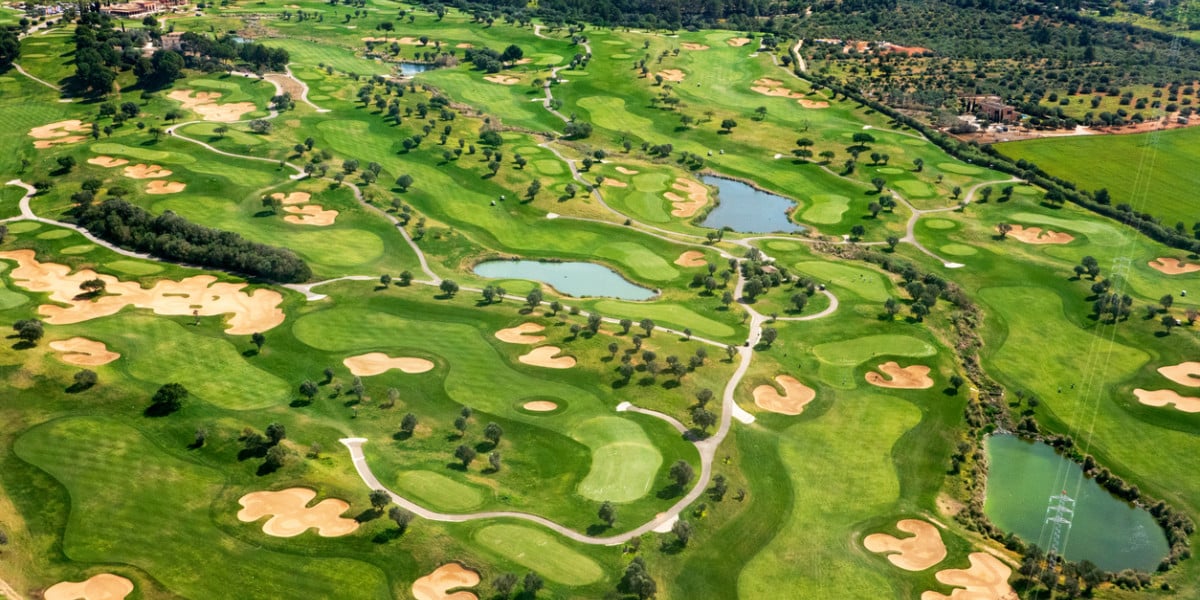
Golf settings often answer many of the questions buyers are now asking. They tend to offer greener outlooks, a lower-density feel, mature landscaping, access to leisure facilities and a sense of privacy that can be difficult to find in more built-up coastal areas. For international buyers spending longer periods in Spain, or dividing their time between countries, that combination is increasingly valuable.
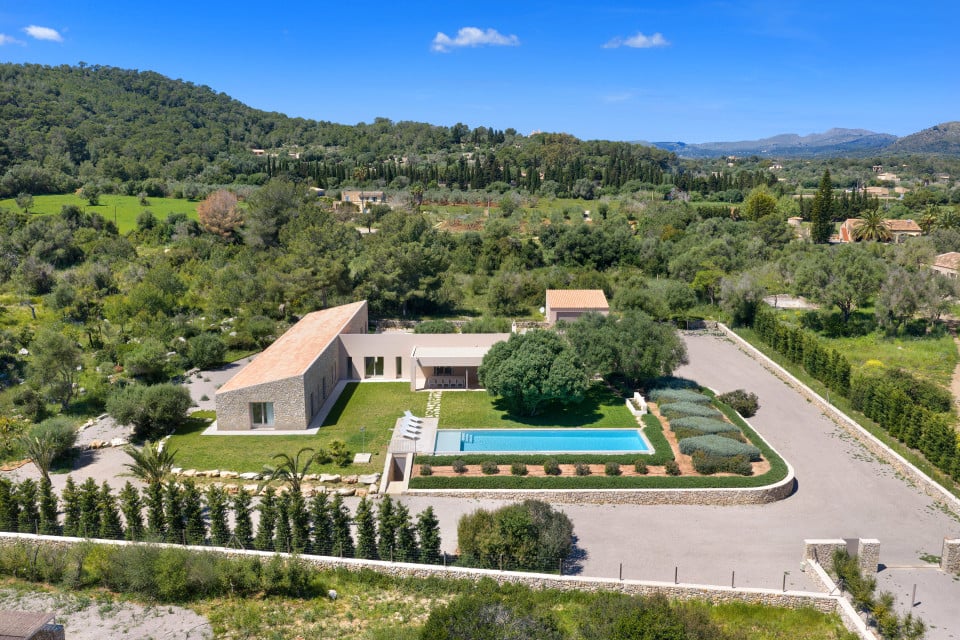
A strong example is Villas Canyamel in north east Mallorca, close to Canyamel Golf. The location captures much of what is driving demand in this segment: natural surroundings, privacy, contemporary Mediterranean design and access to one of Mallorca’s most established golf areas. Rather than feeling like a conventional resort purchase, it offers a quieter, more residential interpretation of golf living.
This is where the category becomes more interesting. Golf properties are no longer only for committed players. For many buyers, the course is part of the landscape and lifestyle rather than the sole reason for purchase. The appeal lies in the space, the setting and the ease of everyday living.
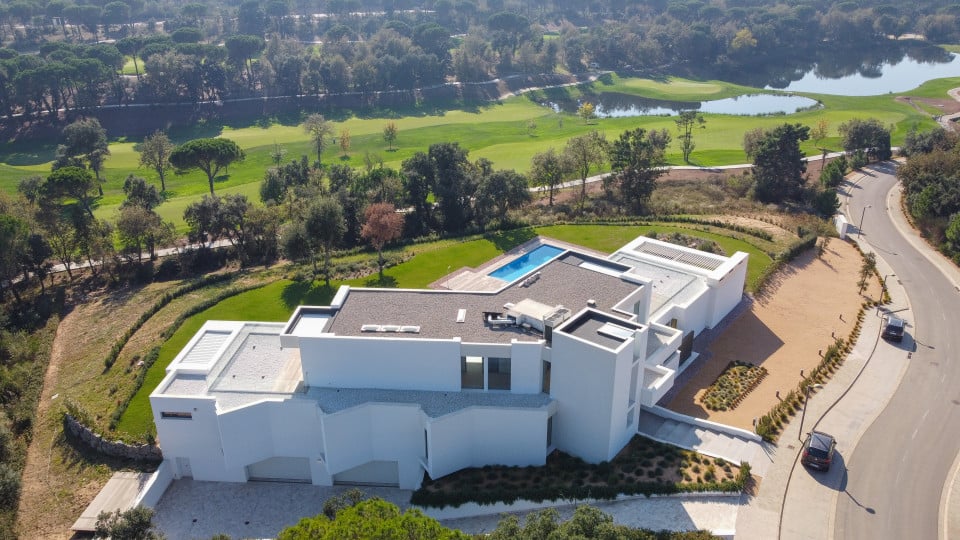
In Girona, the homes around PGA Catalunya, now Camiral Golf & Wellness, have an added layer of relevance. The resort has been confirmed as the host venue for the 2031 Ryder Cup, one of golf’s most prestigious international events. It will also form part of the build-up to the tournament through the Estrella Damm Catalunya Championship, a DP World Tour event beginning in 2026, with editions at Camiral scheduled for 2028, 2029 and 2030. That gives the area a sharper global profile, reinforcing Camiral’s position not just as a residential golf resort, but as one of Europe’s most closely watched golf destinations.
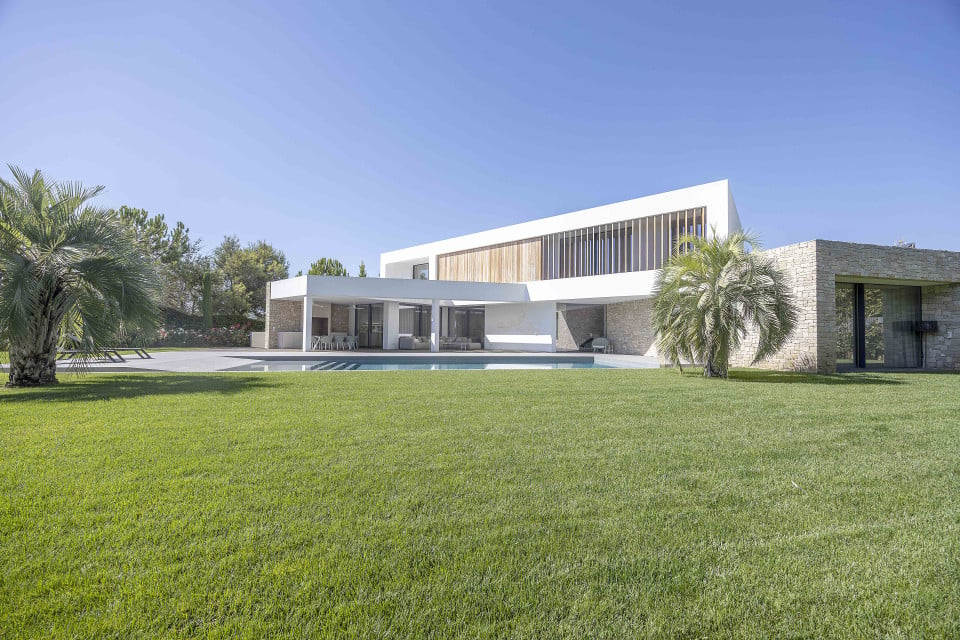
In Valencia, properties close to Escorpión Golf offer a different proposition: suburban space, proximity to the city, international schools and quick access to the airport. This makes golf living especially relevant for families and relocators who want more room without losing the advantages of an urban lifestyle.
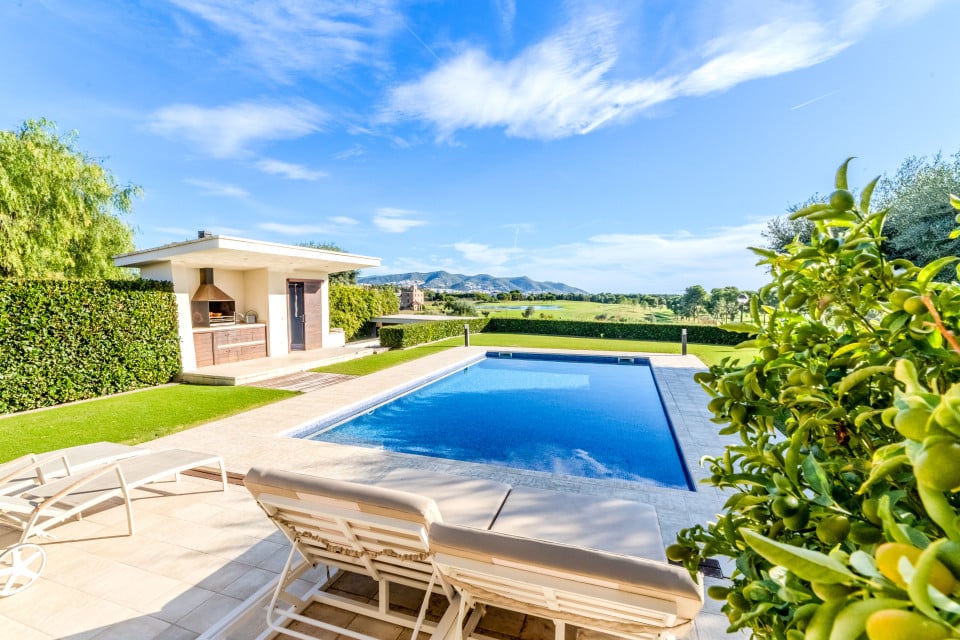
Sitges offers another variation. Homes near Terramar Golf combine access to the course with sea views, international schools and proximity to Barcelona, creating a lifestyle that works for both second-home buyers and those looking for a more permanent Mediterranean base.
What connects these markets is not simply golf, but scarcity. The best homes close to established courses often benefit from mature landscaping, open outlooks and settings that are difficult to reproduce. As Vida Económica notes, the success of these residential environments depends on more than the course itself; infrastructure, services and leisure offering are all essential to long-term value.
As Spain’s prime market becomes more selective, buyers are looking beyond square metres alone. A well-positioned golf property can offer lifestyle, landscape and long-term appeal in equal measure. Whether in Mallorca, Girona, Valencia or Sitges, the most desirable homes are those where the course forms part of a wider way of living: discreet, spacious and distinctly Mediterranean.