Published in Market trends
Why Spain’s best-connected residential enclaves are becoming prime in their own right
Spain’s luxury property market is becoming more selective, with Maresme, Pozuelo, La Moraleja and Conde de Orgaz attracting buyers seeking space, privacy, security and strong connectivity.

- Blog
- Articles
- Market trends
- Why Spain’s best-connected...
Spain’s prime property market is no longer defined only by the most recognisable city-centre addresses or the best-known coastal postcodes. Those places still matter, and always will. But as buyers become more selective, the search for luxury property in Spain is increasingly shaped by how a home functions in daily life. Privacy, school access, security, outdoor space, parking and proximity to transport are no longer secondary details. In many cases, they are what turns a good property into a serious purchase.
The wider market backdrop helps explain why these prime residential areas near Madrid and Barcelona are gaining attention. Spain’s housing market remains under pressure from strong demand and limited supply, with official INE data showing annual house price growth of 12.9% in the first quarter of 2026. International demand also remains resilient, with foreign buyers representing 13.92% of purchases nationally in the latest Registradores data.
Within the prime segment, however, the story is less about broad national growth and more about precision. Buyers are not simply asking whether buying property in Spain is attractive. They are asking which micro-location offers the right balance of lifestyle, liquidity and long-term usability.
That is particularly visible around Madrid and Barcelona, where several established residential enclaves are being viewed with renewed seriousness. These are not secondary locations in the old sense. They are mature, well-connected markets with their own logic, their own buyer profiles and, increasingly, their own version of prime value.
In Madrid, the shift is clearest in the capital’s established residential belt. For family buyers looking at luxury homes in Madrid, the appeal is not only more square metres. It is the possibility of living with greater privacy, more outdoor space and a more controlled daily environment, while remaining close to the city’s business districts, schools and airport.
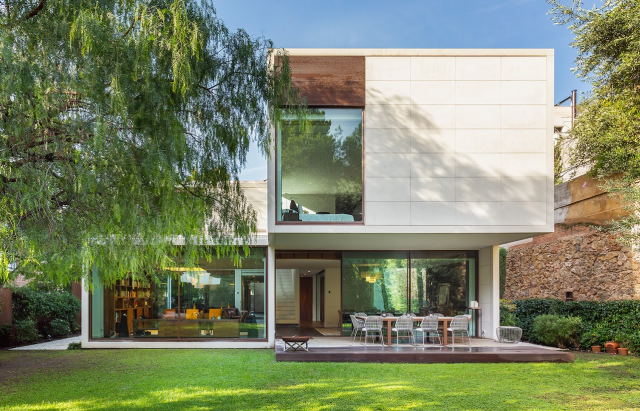
Pozuelo, La Moraleja and Conde de Orgaz each answer that brief differently. Pozuelo combines large family homes, strong local services and proximity to the capital, with La Finca adding one of Madrid’s most recognisable gated residential environments. For buyers considering Pozuelo luxury homes, its appeal lies in security, privacy, landscaping and architectural consistency, qualities that matter to those who want discretion as much as space.
La Moraleja sits at the most established end of Madrid’s low-density luxury market. Large plots, mature gardens, private security and gated communities have made La Moraleja villas a long-standing choice for senior executives, entrepreneurs and international families. Its strength is not only prestige, but the fact that it functions as a complete residential ecosystem, with schools, sports clubs and services built around family life.
Conde de Orgaz offers a quieter and more discreet version of prime Madrid living. Lower density, detached homes, green streets and a calm residential atmosphere give Conde de Orgaz property a very different character from the city’s apartment-led districts. Its appeal lies in being private without feeling remote, close to schools, business areas and the airport, yet removed from the visibility and intensity of central Madrid.
The common thread is a more practical understanding of luxury. For many buyers, the strongest address is not automatically the most central one. It is the place where privacy, school access, security, outdoor space and daily convenience come together.
Dils Lucas Fox’s 2025 closed sales data supports this reading of the market. Across completed sales, international buyers represented 61%, while 57% of purchases were for a primary residence and 31% were for a second home or holiday home. That matters because it shows that Spain’s appeal is not only seasonal or discretionary. A large share of buyers are making deeper lifestyle decisions, particularly in areas where a home can serve as a permanent base, a family hub and a long-term asset.
Maresme is one of the clearest examples of this shift near Barcelona. It is often described as a coastal market, but that does not fully capture its current appeal. For many buyers looking at Maresme property, the attraction is not simply being by the sea. It is about combining Mediterranean space with access to Barcelona, good schooling options, established towns and a more residential pace of life.
In Dils Lucas Fox’s 2025 closed sales in Maresme, 73% of purchases were for a primary residence, while 80% of homes sold were villas. International buyers represented 57%. This is not the profile of a purely holiday-led market. It points to families and long-term residents choosing Maresme because it gives them something increasingly difficult to find in the city: houses, gardens, privacy and room to grow, while remaining connected to Barcelona’s professional and cultural life.
That balance is becoming more important as buyers compare locations in a more sophisticated way. A city-centre apartment may offer architecture, walkability and cultural proximity. A house in Maresme, Pozuelo, La Moraleja or Conde de Orgaz may offer land, silence, parking, security and a different quality of family life. Neither is inherently better. The point is that prime buyers are increasingly clear about what they want their home to do.
This is where Spain’s prime real estate market is becoming more selective. The best purchases are shaped by micro-location, property type and lifestyle fit. Street, orientation, plot size, renovation quality, school access, privacy, planning restrictions and future liquidity all matter. In some cases, they matter more than a famous postcode.
Spain’s prime market remains supported by strong fundamentals, from international demand to limited supply and continued price growth. But the most interesting story in 2026 may not be only the rise of the best-known destinations. It may be the growing strength of residential enclaves that allow buyers to stay close to Spain’s major cities while gaining more space, more privacy and a more complete version of home.