Published in Market trends
Tagged with Buyer
Miami’s next chapter: why European buyers are looking beyond Spain for urban real estate
As Miami continues to attract international capital, European buyers are looking at flexible, design-led residences in emerging urban districts such as Wynwood and Edgewater.

- Blog
- Articles
- Market trends
- Miami’s next chapter: why European...
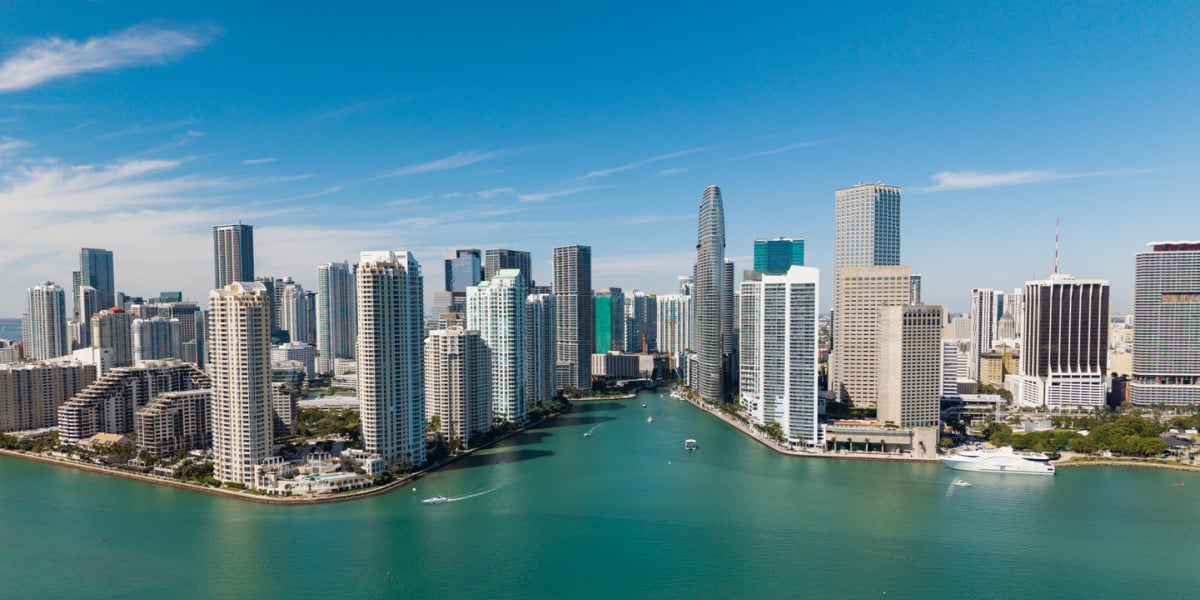
Miami has long held a place in the imagination of international buyers, but its appeal is changing. Once seen largely as a second-home destination, the city is increasingly being viewed through a more strategic lens: as a business hub, a cultural centre and one of the most dynamic urban real estate markets in the United States.
For European buyers, this shift is particularly relevant. The combination of corporate relocation, tourism, rental demand and urban regeneration has created a market that feels both lifestyle-driven and investment-led. Greater Miami and Miami Beach welcomed 28.2 million visitors in 2024, with estimated tourism spending of 22 billion dollars and a total economic impact of 31.1 billion dollars, according to figures included in the press release.
At the same time, Miami’s luxury residential market has seen significant growth. The value of prime homes in the city has almost doubled since 2020, with a 1 million dollar investment in January 2020 estimated to have reached approximately 1.9 million dollars by January 2025. For buyers used to the maturity and relative scarcity of Europe’s leading prime markets, this rate of appreciation helps explain Miami’s renewed appeal.
Much of the attention is now focused on the areas north of Downtown Miami, where infrastructure, mixed-use development and cultural investment are reshaping the city. Wynwood and Edgewater have become especially important within this story. What was once a more creative, fringe district is now attracting global companies, restaurants, galleries and a new generation of residential projects designed for international, mobile buyers.
This is the context behind Dils Lucas Fox’s collaboration with The Rider Miami, a boutique residential project by Rilea Group on NE 29th Street. Rather than simply adding another overseas development to its portfolio, Dils Lucas Fox is responding to a more defined trend: buyers in Spain are increasingly looking for access to international markets where lifestyle, liquidity and rental flexibility converge.
The Rider Miami reflects that shift. The 12-storey project will include 152 fully furnished residences, with prices from approximately 600,000 dollars to 2.2 million dollars and homes ranging from 40 sqm to 215 sqm. Delivery is expected in 2027. Its no rental restriction model, ready-to-use residences and selected lock-out layouts are designed to make ownership easier for buyers who may divide their time between Europe and the United States.
That flexibility matters. For many international buyers, the question is no longer simply where to buy, but how easily an asset can be lived in, rented, managed and exited. The Rider Living property management platform has been created around that reality, covering distribution across more than 100 international channels, guest reception and rental income management.
The project also speaks to a wider change in the luxury market. Buyers are increasingly drawn to residences with identity, service and a sense of place, rather than buildings defined only by square metres or amenities. The Rider brings together hospitality-style wellness, private social spaces, music, art and design, including a permanent photography collection by Lynn Goldsmith and Timothy White, alongside more unexpected features such as The Toy Box, with collectible Harley-Davidsons, Ducatis and Vespas for residents.
Paloma Pérez Bravo, CEO Residential, Dils Lucas Fox, describes Miami as “one of the most interesting urban investment success stories in the United States”, supported by business relocation, tourism, rental demand and urban transformation. For buyers in Spain, she says The Rider offers “a clear way to access this opportunity” through a flexible, fully furnished product in a part of the city where the next phase of growth is already taking shape.
For Dils Lucas Fox, the collaboration also points to a broader evolution in advisory. Spain remains one of Europe’s most attractive residential markets, but the needs of high-net-worth buyers are increasingly international. Many are no longer making isolated property decisions. They are building lifestyle portfolios across cities, coasts and financial centres, with an eye on personal use, capital preservation and income potential.
Miami now sits firmly within that conversation. Its appeal lies not only in climate or visibility, but in the way the city has repositioned itself: more entrepreneurial, more cultural and more global than it was a decade ago. For European buyers looking beyond traditional second-home markets, that is precisely what makes it worth watching.