Published in Market trends
Why private tennis courts are finding new relevance in Spain’s luxury property market
From clay courts and private villas to padel, wellness and branded residences, tennis is becoming part of the lifestyle premium in Spain’s luxury property market.

- Blog
- Articles
- Market trends
- Why private tennis courts are finding...
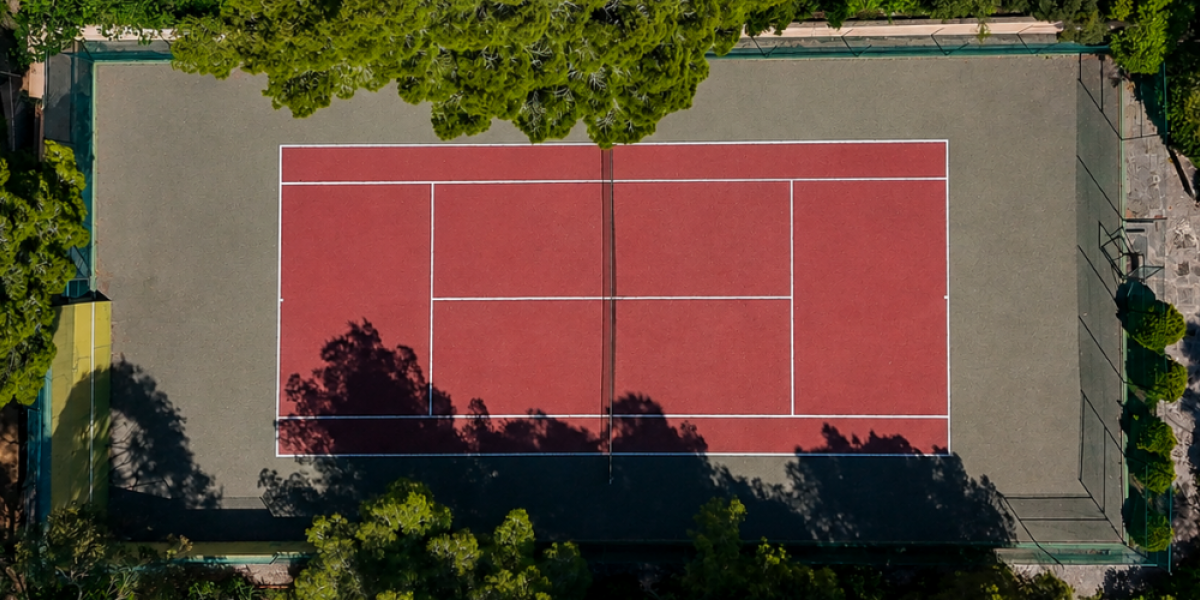
In Spain, tennis has never been only a summer sport. It belongs to the country’s rhythm of life: clay courts, long outdoor seasons, clubs, academies and late evening matches that stretch well beyond the day’s heat. For luxury property buyers, that connection is becoming increasingly relevant. A private tennis court is no longer simply a grand estate feature. In the right setting, it has become a marker of space, privacy and a more active way of living.
Its value is not automatic. A tennis court needs the right plot, the right orientation and proper maintenance. In some homes, particularly where land is limited or the court has not been cared for, it can feel like underused space. In Spain’s prime residential markets, however, where outdoor living is central and large plots are increasingly difficult to replicate, a well-designed court can strengthen the appeal of a property.
The value of a tennis court is best understood as part of the wider premium attached to land. A court needs space, privacy and separation from neighbouring homes, so it tends to appear in properties that already offer the qualities luxury buyers are looking for: mature gardens, generous plots and room for family life. In markets such as the Costa del Sol, Mallorca, the Maresme and Madrid’s low-density suburbs, it can help a villa stand out, particularly when buyers are comparing homes with similar interiors, pools and finishes.
This is particularly relevant in a market where outdoor space has become one of the clearest expressions of quality. Spain’s residential market continues to show strong momentum, with INE data reported by El País showing house prices up 12.9% year-on-year in the first quarter of 2026. At the top end, demand is increasingly focused on homes that offer more than interiors alone: privacy, gardens, terraces, sport and a way of living that makes full use of Spain’s climate.
A private tennis court makes those qualities visible. It signals land, not just square metres. It suggests privacy, not only finishes. It also responds to a broader shift in high-end property, where buyers increasingly want homes that support everyday life: somewhere to exercise, host, spend time with family and make better use of the outdoors.
Spain also has a stronger sporting backdrop than most European markets. The country’s tennis culture has been shaped by clay, academies and generational champions. The Real Federación Española de Tenis continues to highlight the depth of the national game, with AS reporting that the RFET reached a record €2.887 million in support for players and professional tournaments in 2025. According to the same report, Spain’s calendar includes 12 ATP Challenger tournaments, four WTA 125 events, 70 ITF World Tennis Tour events and 28 ITF Junior events, making Spain the country with the most tournaments in that junior category worldwide.
That sporting infrastructure gives tennis cultural weight. A court in Spain does not feel imported. It fits the climate, the landscape and the way people use homes. A clay court in Marbella, Mallorca or the Maresme is not a decorative extra in the same way it might be in a colder market. It can be part of everyday life for much of the year.
This is why tennis courts tend to work best in low-density luxury locations. They are most convincing in areas where buyers already expect gardens, privacy and outdoor amenities: La Moraleja, Pozuelo and the north-west of Madrid; Pedralbes and the Maresme around Barcelona; Mallorca’s larger estates; and the Costa del Sol’s villa markets. In these locations, the court is rarely an isolated feature. It sits within a wider lifestyle package that may include a pool, gym, spa, guest house, staff accommodation, landscaped gardens and secure access.
The Costa del Sol shows how sport, branded living and luxury development are beginning to overlap. Idealista/news reported in May 2026 that Armani Residences Marbella, a 33-home project involving Sierra Blanca Estates and Palya Assets, the company led by Abel Matutes and Rafael Nadal, would bring another high-profile international brand into Marbella’s luxury residential market. Cinco Días has also reported on Nadal and Matutes’ wider real estate plans on the Costa del Sol, including a proposed investment of more than €200 million in luxury homes in Marbella and Estepona.
The appeal is not limited to celebrity-linked projects. More broadly, sport, wellness and managed living are moving closer together. Buyers increasingly look for homes that remove friction from daily life: places where they can exercise, host, recover and relax without leaving the property or the community.
Padel has accelerated that shift. While tennis remains the more classic estate amenity, padel has become Spain’s more social racket-sport phenomenon, with the Federación Española de Pádel recording 109,040 federated licences at the end of 2024 and 111,866 in 2025. Its smaller footprint also makes it easier to incorporate into gated communities, new developments and villa renovations.
Still, tennis carries a different weight. A private tennis court suggests land, permanence and an older, more understated form of prestige. In the most established prime markets, that can be powerful. A clay court bordered by cypress trees or Mediterranean planting is less about novelty than continuity. It feels rooted, especially in Spain, where the game is associated with discipline, family, clubs and outdoor life.
The strongest examples are those where the court feels naturally integrated into the property: discreetly positioned, well maintained and connected to the rhythm of the house, whether beside the garden, close to the pool or set apart for privacy. When it feels intentional, it can make a home more distinctive. When it feels like an afterthought, buyers tend to notice.
The private tennis court is not returning because of nostalgia. It is relevant because high-end buyers are becoming more precise about how a home works. They want space, but not empty space. They want privacy, but not isolation. They want sport and wellness, but without turning the home into a hotel.
Spain is particularly well placed for this next phase. Its climate, clay-court culture, international buyer base and strong villa markets give tennis a natural role in the country’s luxury residential story. The court may not always add a fixed percentage to the asking price, and any claim that it does should be treated with caution. But in the right property, in the right location, it can help make a home feel rarer, more complete and more in tune with the way buyers actually want to live.