Published in Market trends
The evolution of golf properties in Spain
Discover how Spain’s golf properties are evolving from uniform homes to bespoke, architect-designed retreats focused on lifestyle, privacy and personalisation.


- Blog
- Articles
- Market trends
- The evolution of golf properties in...
For decades, golf properties in Spain followed a familiar formula: expansive developments with rows of near-identical homes bordering fairways, designed less for architecture and lifestyle than for proximity to the sport. Buyers, often focused on playing as much golf as possible, sought convenience, while developers prioritised volume.
Today, the market has evolved dramatically. As Paloma Pérez Bravo, CEO Residential at Dils Lucas Fox, explains, buyers’ expectations have shifted from uniformity towards lifestyle, architecture, and a deeper connection with the environment. “The next generation of golf properties are often family retreats; owners are looking to spend more time at the property, sometimes several months of the year, and want it to feel private and personal.” The profile of buyers is broader, with more women at the centre of decisions. Wellness, privacy, and design that speaks to a sense of place are now non-negotiable.
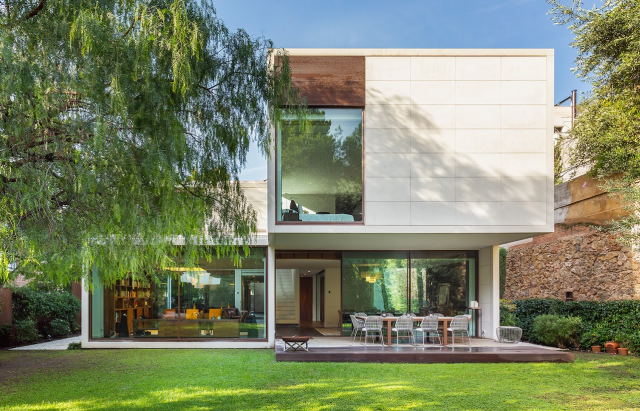
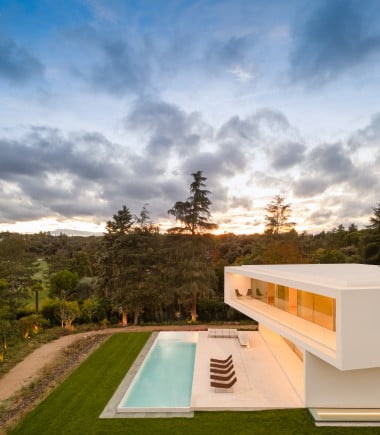
Architect-designed homes are increasingly setting the tone for this transformation. The Trilogy in La Moraleja, a project by Fran Silvestre, is a striking example. Overlooking the lake at Royal La Moraleja golf course, the three properties are conceived almost as sculptures, their geometric volumes framing views of pines, cypresses, and olive trees. Locally sourced materials, stone, ash, and brass, echo the surrounding landscape, creating what Silvestre describes as a sense of calmness, protection, and seclusion. This level of design contrasts sharply with the ‘’cookie-cutter’’ properties of the past.

As Pérez Bravo notes, the ethos has flipped. Previously, developers built what they wanted, with location and asset value as the main selling points. Buyers might have been able to tweak finishes but rarely influenced design. Today, personalisation and co-creation are paramount. Buyers want to be involved earlier in the process, shaping their home around their lifestyle and values.
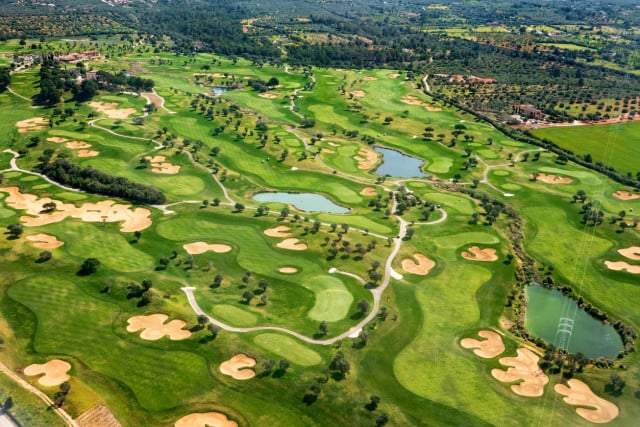
Golf courses themselves have followed this path of change. Where once the emphasis was on maximising capacity, today there is a focus on respecting local environments and creating landscapes where flora and fauna can thrive between holes. Courses are more creative, less uniform, and more responsive to the character of their region. This trend is spreading beyond established premium destinations into emerging areas like Cádiz, Granada, and Murcia, where buyers are investing in the €2-5 million range. Meanwhile, the €5-10 million market remains highly active, particularly in prime enclaves such as Sotogrande, Finca Cortesín, and La Moraleja.
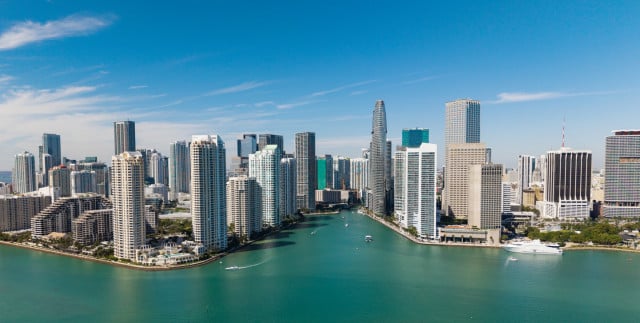
The profile of buyers is diversifying too. Parents are purchasing homes for their Gen Z children, while young tech entrepreneurs are seeking modern retreats of their own. International buyers, particularly from Latin America, bring another layer of demand. “They don’t want what they already have in Miami,” says Pérez Bravo. “They want something rooted in its surroundings, something classically Madrileño.” This desire for authenticity is reflected in the rise of “soft modernism” - an architectural language that blends modern lines with warmth, tactility, and sensitivity to context, gradually replacing stark minimalism.
From volume-driven developments of the past to today’s tailored, design-led retreats, golf properties in Spain have undergone a remarkable transformation. The emphasis is no longer solely on the game but on creating homes that feel rooted in their environment, reflective of personal identity, and attuned to a more holistic lifestyle. For today’s buyers, it is not just about owning a property near a course - it is about owning a home that offers culture, belonging, and a true sense of place.