Index of Articles

Uncover another side of Ibiza. [ Zip archive : 1,007 Kb ]

Villas for the super-rich in Ibiza - The Sunday Times, 20th July 2008

By Vanessa Jolly

Think Ibiza and you’re probably imagining pill-popping hedonism and beered-up lads on budget flights. This small Balearic island has another side, however, one that has, until recently, remained tucked away amid the pine-topped hills and olive groves: a world of private jets and retinues, where privacy and discretion are key, and money is never, ever mentioned.

Forget all you’ve heard about foam parties; picture 10-bedroom supervillas and lava-stone infinity pools. Ibiza is fast becoming Europe’s most prestigious summer address, as hedge-funders, film directors, Saudi Arabian princesses and “sophisticated bohemians” - the moneyed British elite – flock there for the ultimate chillout.

“Hedonism is a small part of island life,” says Lady Fritzi Northampton, a German-born former modeland resident of Ibiza since 1989, who has written a bookabout the island’s lifestyle “People come in private jets; a chauffeur collects them at the airport and whisks them off to their secluded villa.”

Fifty miles off the Spanish mainland, Ibiza has been a fashionable destination since hippies discovered its spiritual “vibe” in the 1960s – Es Vedra, a tiny island just off its southwest coast, is said to be the world’s third most magnetic point, after the North Pole and the Bermuda Triangle. Since those early days of love, peace and full-moon parties, a new travelling class has moved in, lured by the high standard of living, high resale values and hefty summer rental yields: between £2,800 and £30,000 a week from June to September.

The top tier of the market is not only surviving but thriving amid the credit crunch. “Over the past three or four months, there has been huge demand for high-end properties,” says Alex Vaughan, a partner in the Barcelona-based estate agent Lucas Fox (www.lucasfox.com). “I’m getting calls about properties priced at between €6m and €15m (£4.8m-£12m) every two weeks; before, it was for €2m or €3m villas. The idea of Ibiza as a cheap destination has disappeared.”

Local authorities are keen to promote the island’s growing reputation as a haven for the super-rich. Three years ago, Ibiza had one five-star hotel; by the end of this summer, there will be six. An Irish investment firm has been given the go-ahead to build the first luxury hotel in San Antonio, traditionally the clubbers’ favourite, and Ibiza airport now has a terminal for private jets – 43 landed in just one day earlier this month.

It was the laid-back appeal of Ibiza thatattracted Susan Sangster, 51, former wife of Robert Sangster, the late racing tycoon. “Ibiza is not intrusive or posey; it’s the total opposite of ‘see and be seen’,” she says. “You can do it however you like. I’ve only been clubbing at Pacha twice in all the years I’ve been coming here.”

Sangster, who spends winter and spring on her Barbados estate, first came to the island 11 years ago with her children – Melissa, now 27, Sam, 21, and Max, 18 – and bought a six-bed property there in 2003. She took one look at the finca on the hillside of the exclusive Es Porroig peninsula, in the south of the island, with its view of yachts bobbing in glittering waters, and knew she had to have it. Life is a relaxed round of taking out the family Rib (rigid inflatable boat), supper parties on the beach and personal trainers. “It’s thanks to summers here that my sons have their boat licences before their driving licences,” she says.

Not surprisingly, a new breed of developers and designers has sprung up to cater to this influx of wealth: the top-end properties on offer have staff quarters, guesthouses, terraces and breathtaking views as standard.

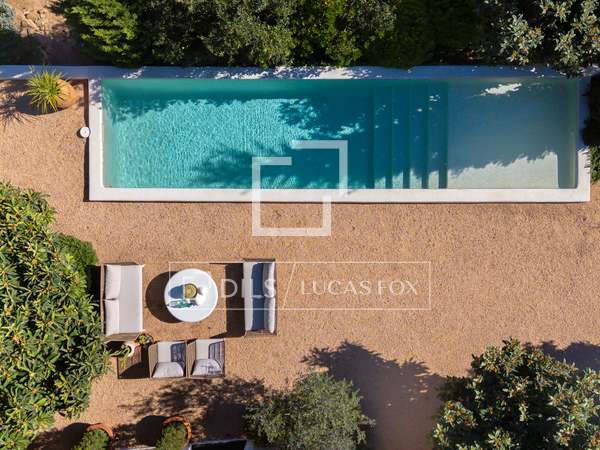
Philip Gonda, 47, a Belgian hotelier and developer, has built Can Curt, a Balinese-inspired villa in the Morna Valley, near Santa Gertrudis, in the centre of the island. On the market for £3.89m, the six-bed, 600-square-metre house has staff accommodation and an infinity pool built with lava stone, which, because of its black colour, retains heat in cooler weather. Gonda expects the house to be bought by one of Ibiza’s growing band of flexi-workers – “a businessman whose company is in, say, Berlin, and who will spend three days here with the family and four at the office”.

You could save 20%-40% by building yourself, but it can be difficult without good contacts. “The planning regulations change from one municipality to the next and depend on the politics of the government constituency,” Gonda says. “If you don’t speak Spanish, you’re lost.”

The island may have turned relaxation into a fine art, but expect to pay at least £6m for the ultimate “chillout” – the kind of place where you step lazily from your property straight onto your yacht. If you are happy with just a decent sea view, prices start at £1.6m for a villa and £500,000 for a two-bedroom flat.

For the ultra-rich, separate houses for guests arede rigueur. “Ibiza is about sharing time with friends,” says Paloma Bonder, director of Ibiza Solutions (www. ibizasolutions.net ), a luxury concierge service launched in 2006. “But my clients also want privacy. They spend 70% of their time at the villas, pay about £1,000 a day to rent a yacht and sail over to the coves at Las Salinas and the island of Formentera.” Bonder was once asked to fly staff and ingredients to Ibiza from El Bulli, the world-renowned restaurant in Roses, on the Costa Brava, to prepare a meal. Typical of such properties is Villa Bikini, in Santa Ines, a three-bed home with two one-bed guesthouses, on sale for £3m with Lucas Fox, in association with Quintessentially Estates. Guests can choose between an opulent pool house and an Indonesian hut set in a pine grove.

Most high-end properties are marketed by more than one agent, and are sold with furniture included. “Clients want to be given the key and not have to think about the details, or even whether there are any towels,” Bonder says. Buying is relatively straightforward if you ensure all paperwork is checked by independent lawyers; fees, taxes and other costs will add 8% to the price.

For those ready to do without staff and a heliport, there are affordable homes in rural areas a 15-minute drive from the beach, especially in the quieter parts of the north, where two-bedroom villas start at £590,000.

Stephen Woodhams, 44, a horticulturalist with upmarket clients in both London and Ibiza, bought his two-bed finca in the hills above San Juan in 1999. He is reluctant to say how much he paid, but admits it was considerably less than the £1.3m for which a nearby property recently sold. “This part of the island is popular with artists – you’ll see them at the new organic pizza place, or in the cafe checking their e-mail,” he says.

Woodhams is saving for his infinity pool and, instead of a £16,000-a-year maid, has a local woman who occasionally comes to stock the fridge. “This house is my life’s work,” he says. “I would sell everything I have to make it happen.”

Costa Plenty - The Independent, 5th March 2008

This article is available as a PDF download.

Costa Plenty - The Independent, 5th March 2008. [ PDF doc. : 401 Kb ]

Costa Brava, Spain - The Robb Report, January 2008

This article is available as a PDF download.

Costa Brava, Spain - The Robb Report, January 2008. [ PDF doc. : 1.76 Mb ]

The Art of Wintering - The Robb Report, January 2008

This article is available as a PDF download.

The Art of Wintering - The Robb Report, January 2008. [ PDF doc. : 1.41 Mb ]

A Walk on the Wild Side - Homes Overseas Magazine, January 2008

This article is available as a PDF download.

A Walk on the Wild Side - Homes Overseas Magazine, January 2008. [ PDF doc. : 1.92 Mb ]


Hollywood Hideaway - International Herald Tribune Online, January 8th 2008

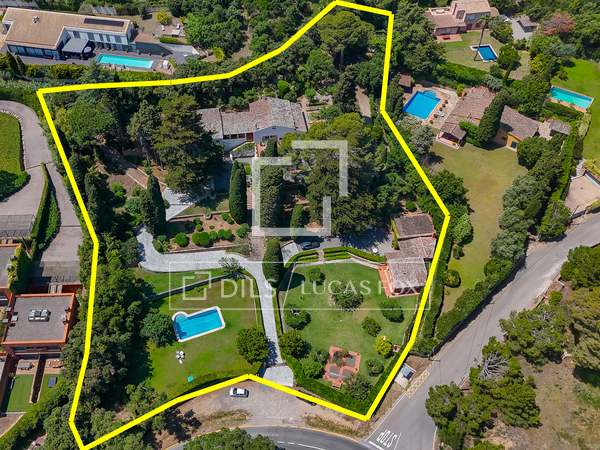
The Costa Brava retreat built by ‘30s film star Madeleine Carroll is for sale, priced at €10 million.

In her heyday, Carroll was the original cool blond, an English beauty who starred in such classic movies as “Prisoner of Zenda” and Alfred Hitchcock’s “39 Steps.” Later, she grew into a legend working as a nurse in Italy during World War II, earning the American Medal of Freedom.

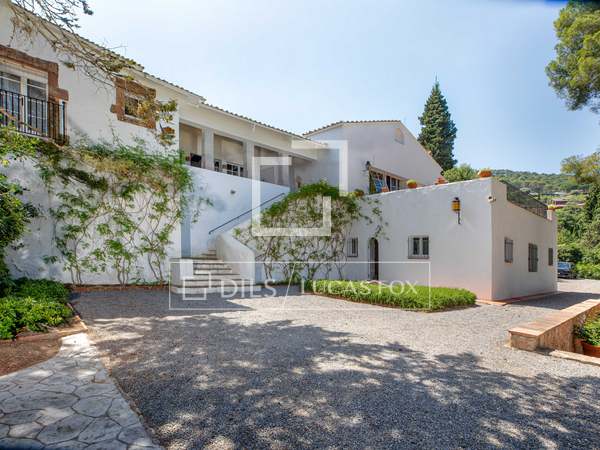
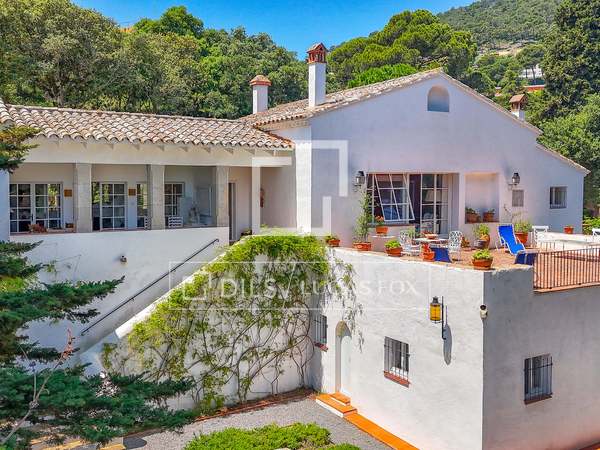
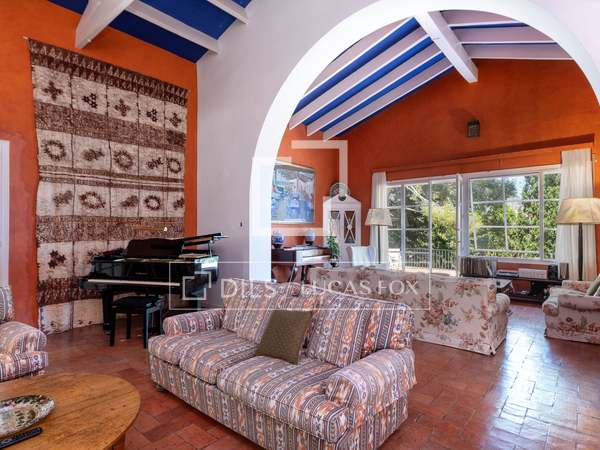
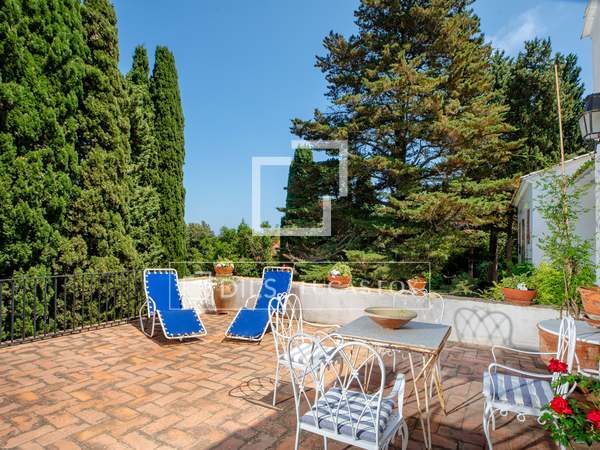
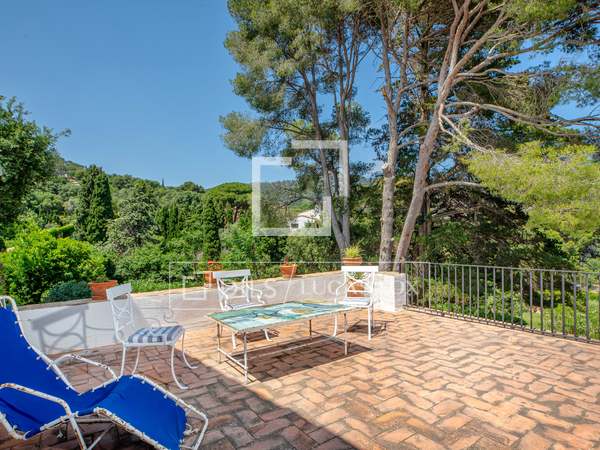
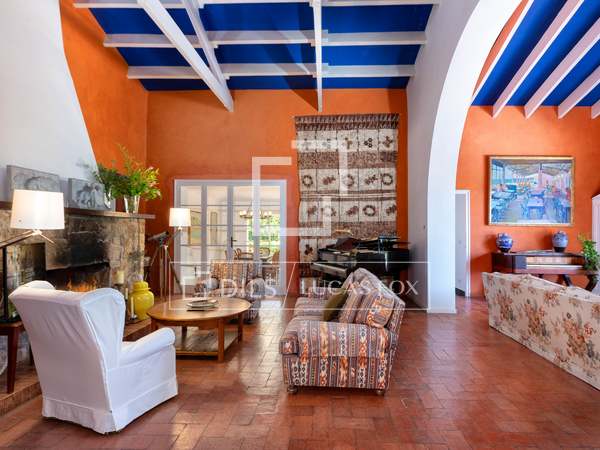
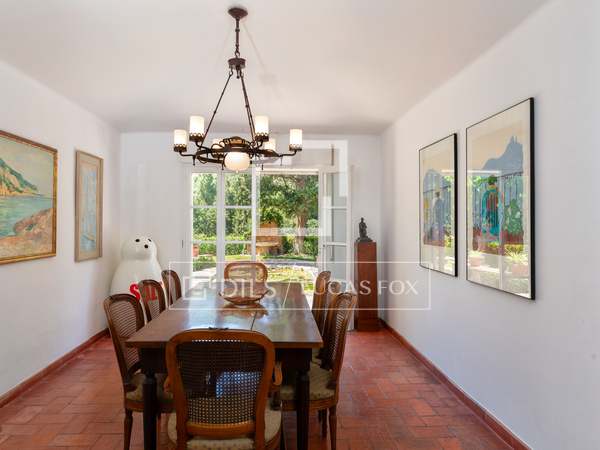
Her 6,000-square-meter estate on the waterfront south of Palamos features eight bedrooms in a Spanish-style country house, where Carroll entertained “prominent European and North American figures from the world of film, culture and politics,” according to the listing. The centerpiece is the “Grand Hall,” with high ceilings, a stone fireplace, arched windows and a traditional minstrels gallery.

 
The living room

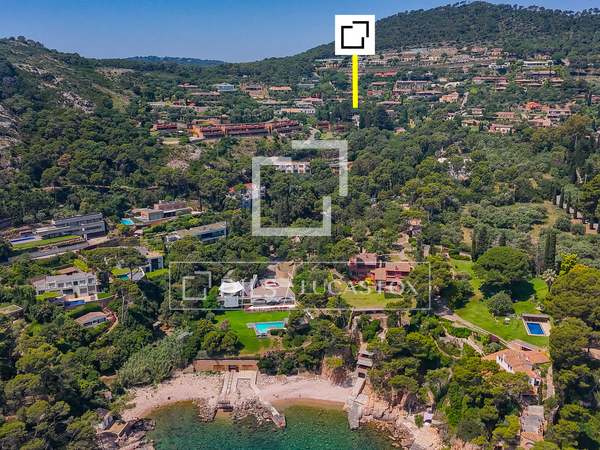
The manicured gardens in the rear of the house include a wide lawn, pool and Jacuzzi surrounded by pine trees, leading to a secluded beach.

 
The gardens

This article can also be found online at http://blogs.iht.com/tribtalk/properties/roof/?p=288.

High-spec apartments - Financial Times House and Home, 10th Nov 2007

This article is available as a PDF download.

High-spec apartments - Financial Times House and Home, 10th Nov 2007. [ PDF doc. : 1.27 Mb ]

Spanish Home Owned By Hitchcock Actress - Wall Street Journal Online, January 11th 2008

Spanish Home Owned By Hitchcock Actress

A house on Spain's Mediterranean coast once owned by Hitchcock film actress Madeleine Carroll is on the market for €10 million (about $14.7 million).

The blonde, British-born actress, known for the director's 1935 thriller "The Thirty-Nine Steps," had the home designed as a mix between a castle and a country house in the mid-1930s, according to agent Tom Maidment of Lucas Fox, which has the listing along with Quintessentially Estates.

Located between Palamós and Playa de Aro, two of the many towns on Spain's Costa Brava, the 1.5-acre property features a large landscaped garden, a pool and stairs to the beach. The 9,700-square-foot house has eight bedrooms, beamed ceilings, tiled floors, arched windows and a double-height great hall designed for entertaining.

Ms. Carroll, who also appeared in "The Prisoner of Zenda" among other films, also served as a Red Cross field nurse during World War II after her sister was killed in the German bombing of London. Ms. Carroll died in Marbella, Spain, in 1987, at age 81. The current owner's family bought the house from the actress's estate, Mr. Maidment says.

This article can also be found online at http://online.wsj.com/article/SB120002007752583027.html?mod=at_leisure_main_reviews_days_only

Buying in Barcelona - British Airways Business Life, November 2007

This article is available as a PDF download.

Buying in Barcelona - British Airways Business Life, November 2007. [ PDF doc. : 3.64 Mb ]

The Surreal Deal – The Sunday Times, 30th Sept 2007

This article is available as a PDF download.

The Surreal Deal – The Sunday Times, 30th Sept 2007. [ PDF doc. : 3.05 Mb ]

Buying in Spain - Evening Standard, August 2007

 HOMES AND PROPERTY


Barcelona apartment

Barcelona apartment


€722,000 (£487,500)

Experience loft-living in the architecturally sublime beachfront city of Barcelona with this recently renovated two-bedroom and two-bathroom apartment inbetween fashionable El Borne and established Eixample, home to Gaudi's Sagrada Familia.

Transformed from an industrial building, the apartment features high ceilings, large windows and wooden floors. There is parking nearby but with the Paseo de Gracia only five minutes away and good transport links close by, walking out of your front door will be the best way to experience Gaudi’s magnificent heritage.

Call Lucas Fox on 020 7871 0379
www.lucasfox.com

http://es.homesandproperty.co.uk/property_news/hot_areas/spain.html

The Changing Face of Spain - Country Life International Magazine, Summer 2007

This article is available as a PDF download.

The Changing Face of Spain - Country Life International Magazine, Summer 2007. [ PDF doc. : 2.24 Mb ]

Gaud-Given Beauty - The Express - 16th May 2007

This article is available as a PDF download.

Gaud-Given Beauty - The Express - 16th May 2007. [ PDF doc. : 163 Kb ]

Avoid Pain When Buying in Spain - The Daily Express, 9th May 2007

This article is available as a PDF download.

Avoid Pain When Buying in Spain - The Daily Express, 9th May 2007. [ PDF doc. : 1,006 Kb ]

Press Release - 18th April 2007

LUCAS FOX TO EXPAND BUSINESS OPERATIONS INTO THE COSTA BRAVA 

Lucas Fox, the Barcelona-based Estate Agency, has further strengthened its business interests in Catalonia with the opening of a new office in the Costa Brava.

Lucas Fox Costa Brava, which offers a complete service to international clients, will cater for the growing number of foreign buyers seeking properties in this exclusive and beautiful stretch of coastline in the north eastern corner of Spain. The move comes as part of the company’s ongoing development following its successful launch in Barcelona in 2004 and subsequent expansion into Lisbon last year.

Lucas Fox Costa Brava’s primary focus will be on coastal villas and apartments on the popular stretch of coastline from Sant Feliu de Guixols to the former fishing village of L’Escala, just north of the Cap de Begur. It will also offer a broad portfolio of inland properties throughout the province of Girona, ranging from traditional stone country houses (known locally as masias), Catalan townhouses and 11th Century ruins to modern golf course developments.  

“The Costa Brava boasts an extremely buoyant market and, like Barcelona, property prices have been rising steadily for a number of years,” said Tom Maidment of Lucas Fox Costa Brava.  “Last year’s 13.2% rise across the province of Girona was the highest of all the Spanish coastal regions that are traditionally popular with European buyers. The completion in 2008 of the high speed rail link from Paris to Madrid - via Girona and Barcelona- is expected to push prices up yet further.”

The Costa Brava is spread along 200 kilometres of beaches, charming bays and rocky cliffs from the resort of Blanes, 50 kilometres north of Barcelona, to Port Bou, just south of the French border. As a favourite retreat of Spain’s two most famous artists, Pablo Picasso and Salvador Dali, the Costa Brava is rich in culture and history. The region is well known for its wines and gastronomy and is popular for its range of outdoor activities and watersports. Within close proximity to Girona airport, the area is easily accessible from the UK and other European countries and popular with foreign buyers seeking a Mediterranean holiday retreat.

“The Costa Brava tends to attract a different sort of buyer than the south of Spain,” added Tom Maidment. “They are looking for the real Spain and are more attracted to the region for its beautiful landscape, its history, culture, climate, gastronomy and overall quality of life. Another draw is the area’s proximity to the largest ski resorts of the Pyrenees, plus the south of France is just a short drive away.”The average property price in the province of Girona is now 445,000 euros, significantly higher than the national average of 249,000 and the average property in the region has experienced a rise of 139,000 euros over the past two years.

Alex Vaughan, Director of Lucas Fox, said: “The Costa Brava has always been popular with wealthy Catalans, particularly the Barcelonese, many of whom have second homes in the area. For a long time it has also been popular with foreign buyers attracted by its beautiful, uncrowded coastlines and stunning countryside.”

Founded in 2004, Lucas Fox has fast become one of the most successful Estate Agencies operating in Barcelona. The launch of Lucas Fox Costa Brava is the company’s second major development since the opening of an office in Lisbon last year.

“The launch of our Costa Brava branch is an important step in the company’s development. There are a limited number of agencies operating in the area who, like Lucas Fox, exclusively target an international audience so we offer both buyer and vendor an attractive USP,” said Mr Vaughan.“With property prices still rising and the level of foreign investment continuing apace, I believe that the Costa Brava represents an extremely attractive market for the Lucas Fox business,” he added.  

*  *  *

Who could resist? - The Independant - April 11th 2007

More Britons than ever are buying in Barcelona. Graham Norwood gets the lowdown on how to find a chic retreat - or start a whole new life in the sun

"Were I to get the hell out of England today, I'd probably go to Barcelona - it has all the good things, a good way of life, reasonable weather." So says the diminutive Formula 1 boss Bernie Ecclestone - although, unlike many Britons, he hasn't yet made the move.

There are now 4,721 British households, from singletons to families, living permanently in Barcelona. That's up from 1,094 a decade ago - and the number is rising all the time. The classic expat's property route is to rent in the old town - familiar territory for tourists who throng the city, but also close to areas most sought-after by Britons - and then buy after two or three months sussing out the local market.

Barcelona's estate agents say that most Britons go for a flat around the old town in the Born, Gotico, or newly regenerated Raval areas, or on the beachfront. Those who know Barcelona well and have a slightly larger budget want a flat or house in the more expensive and elegant Eixample or Zona Alta areas.

Prices are not low in any part of the market - this city is, after all, the most expensive in Spain. The average Barcelona home costs €624,000 (£425,000), some 56 per cent above the figure for Spain generally. Kyero.com, a sales website that measures asking prices, says that a typical one-bedroom flat within the city is €327,500 (£223,000), and a two-bedroom flat €500,000 (£340,000). You'll need €613,000 (£417,000) for the average three-bedroom home. Move on to a four-bedroom house and you must pay €916,050 (£624,000), while a five-bedroom property will set you back a cool €1.2m (£817,000).

"The preference is for period properties with contemporary interiors, but new-build flats are also popular for occasional use as they're perceived to be less hassle," says Alex Vaughan of the Barcelona-based estate agency Lucas Fox. He should know - he is one of the city's British owner-occupiers, with a flat in a beachfront area called Diagonal Mar. "I've lived in London and Paris, and Barcelona beats both hands down," he says. "It's a city, but a small, relaxed one, and it's easy to move around. The weather is great, you can eat and drink well and inexpensively, and there's a great beach."

But there is still a chance of finding a relatively low-cost property to refurbish, too. DIY and property speculation are not as popular in Spain as in the UK, so run-down properties can still be found at good prices.

For example, Stephen Proffer, who owns the wine bar L'Artiste Musclé in London's Mayfair but splits his time between there and Barcelona, has bought and modernised a three-bedroom attico - a top-floor flat - in a house in Barcelona old town. He has built an extra bathroom, enlarged the kitchen, rewired and generally turned the interior into a stylish home for his Spanish wife Lali and daughter Sophia, who live there full time.

The end result is the classic modern Barcelona home, a period property from the outside but with a contemporary interior. "It was a good way into the local property market, and I'd done it before in the UK," says Proffer. "And it only takes four hours door-to-door. The flight's easy and there are never really any delays at the Spanish end." he says.

So, once they have their ideal home, what do the British expats do? "Many hang out in pubs around town," says Mark Stucklin, who runs www.spanishpropertyinsight.com, an online property advisory service aimed at Britons buying anywhere in Spain. He is the first to admit that, after six years of soaring prices (the 5.2 per cent rise in 2006 was the smallest since before the start of the new millennium), Barcelona is no longer an obvious place to buy purely as an investment, but it has massive lifestyle advantages for anyone wanting an urban second home, or to live there permanently, as he does.

Stucklin owns a three-bedroom apartment in Eixample, a few minutes' walk from Paseo de Gracia, Barcelona's version of Regent Street, but with less traffic and more elegance. "Quality of life in this part of town is exceptional. Everything one needs is just a few minutes' walk away, and there is a good local community feeling," he says.

"Barcelona attracts young people from all over Europe, so you find Brits, Dutch and Swedes, for example, socialising together. Catalans are friendly but tend to have their established social worlds, so foreigners tend to hang out with each other," he says.

Britons wanting to move to Barcelona now have to come to terms with the fact that the best bargains have long gone, but agents insist that there is still plenty of growth to come - most predict 5-7 per cent price rises in each of the next two years. They say that up-and-coming areas include St Antoni and Poble Sec, both seeing a lot of new buyers so likely to have higher-than-average growth as demand outstrips supply. The Poble Nou district is being regenerated and many firms are relocating there, again suggesting more price growth in the pipeline.

But this city isn't really about capital appreciation or rental income. It's about culture, from Gaudi to Picasso, and a near-perfect lifestyle. Bernie Ecclestone knows a winning formula when he sees one.

http://money.independent.co.uk/property/homes/article2437616.ece 

Who could resist? - The Independant - April 11th 2007. [ Image : 760 Kb ]

Homage to Barcelona - The Daily Mail - 6th April 2007

By Zoe Dare Hall

Woody Allen is leaving behind London and New York to set his next movie - starring Penelope Cruz and possibly his current muse Scarlett Johansson – in Barcelona, a city of striking filmic appeal at every turn.  Before him, directors including Pedro Almodovar in All About My Mother and Whit Stillman in Barcelona have spotted the Catalan capital’s potential - from Gaudi’s colourful architectural icons to the vibrant street life and beach scene – to be the star of any film.   

They are scarcely the only ones to be seduced by Barcelona. Since the city’s turning point in 1992 as host to the Olympics, it has become such a desirable place to live – 5,000 Brits live there officially, many more unofficially - that its property now ranks among the highest priced in Spain.  Kyero.com’s Spanish Property Index plots the average price of €624,000 (£430,000) as 156% above the national average.  While many Catalans, for whom £800 is an average professional wage, have been priced out of the market, a new wave of image-conscious estate agencies, such as Home Center & Café with its Foxtons-style sofas and TV screens, are setting up with the foreign expat and investor market in mind.  

“You’re not going to double your money in a few years, but in terms of a five to 10 year investment, Barcelona is still a very solid prospect,” says Alex Vaughan from Lucas Fox, an English estate agency that specialises in Barcelonan property with an average price of £500,000.  “There is high demand and a lack of supply of good city apartments. Also due to geographical restrictions it is difficult to build more apartments,” says Fox.  

So where do you look if you are longing for a Barcelonan bolthole on a lesser budget? Barceloneta, a former fishermen’s district wedged between the old port and the beach, is popular with foreign buyers. Prices per square metre are high at €7,000 (£4,820) per square metre, but 35m2 flats are the norm so you can still find stylishly-renovated one-bed apartments from £170,000 with Lucas Fox.  Barceloneta’s main square has been given a makeover with a designer new market hall and the beachfront is undergoing major works to widen the sands.  “The big pluses of Barceloneta are proximity to the beach and the old town, but while five years ago it was cheap and a good investment, that is no longer the case,” says Vaughan.  

Instead, for beachfront investment potential, many agents point to nearby Poble Nou, a former industrial area whose regeneration project 22@ is transforming the district into a trendy, e-commerce hub.  Described by Mark Stucklin from independent advisory SpanishPropertyInsight.com as an area that “has the potential to become one of the funkiest centre-of-town Mediterranean beachfront districts in Europe”, you can buy loft apartments in converted warehouses there from £430,000 for one bedroom and private patio, to £950,000 for a five-bedroom, open-plan apartment, through Casamona.com.  

More centrally, the city’s mile-long pedestrianised Ramblas is trampled by every visitor who sets foot in Barcelona. But stray west and you enter the Raval, previously a no-go area presided over by prostitutes and drug addicts but rapidly becoming a fashionable, if still slightly edgy, district with a new five-star hotel uplifting its own Rambla de Raval.  

Raval offers good growth potential, comments Alex Vaughan, though as in all districts that fall within the boundaries of the ‘Ciutat Vella’ (old town), owners can only rent out their properties for short term lets if they have a license – and all licenses have been granted, with no more available.  “Poble Sec is a particularly interesting area with potential because it is on the edge of the old town but the restrictions on short term rental licenses don’t apply,” says Vaughan.  “Like the Raval, it’s a central neighbourhood where prices are still considerably lower than adjoining neighborhoods. But where there is highest demand among local and foreign buyers is for luxury apartments in central areas. There are very few on the market.” Although prices have been soaring by 15% a year until 2005, the market is slowing, with 7% increases expected this year, and properties are taking longer to sell.  

“Flats are now on the market for six months compared with a few weeks last year,” says Tine Mathiassen from Casamona.com. “English people are still buying in the centre and Barceloneta and Catalans are looking for more exceptional flats with terraces, but unmodernised flats in less desirable locations are very hard to sell.” Rita Fryer from The Property Finders sees the slowdown as a chance for buyers to find bargains. One investor, she says, has just bought six apartments off the city’s Champs Elysees equivalent, the Paseo de Gracia, for “a bargain” €6,500 (£4,480) per square metre.  “You can do a better deal now than even six months ago,” comments Fryer. “Vendors are being encouraged to take offer of 10-20% less than asking price as asking prices are too high because they are usually set by the vendor rather than agents who have a better idea of the correct market prices.” While inner city prices for resale properties may flatten out this year, Fryer suggests the suburbs and new-build will continue to prosper. “New properties are selling out more quickly than ever due to scarcity, so these prices are not easing,” she says.

Diane Whicher, an independent financial adviser from Surrey, has just bought a new two-bedroom apartment through Lucas Fox for £496,000 in Diagonal Mar, a modern beachside district of glass and steel apartments blocks that has sprung up in the past few years.  “I’ve bought it with three other directors at work as we all work hard and wanted a place to escape to at weekends, preferably near a beach, with regular, cheap and quick flights from London – and Barcelona fitted the bill perfectly,” says Whicher, 52.  “I’ve travelled all over the world but this city is the most amazing place I know,” she adds.

“Diagonal Mar is very central, but it has big, new flats and all our rooms lead onto a huge terrace which overlooks the sea.” Barcelona’s escalating prices may mean property is a lifestyle luxury rather than the most lucrative investment, but Whicher – who stays in her flat at least once a month – can rent out the apartment for up to £170 a night and has already seen it rise in value in four months.  “Diagonal Mar is now the most expensive area of Barcelona and I’ve heard flats in the new block they are building next to ours will go on sale for £820,000. Ours was valued at £590,000 for the mortgage so it’s already gone up.” 

For the ultimate in Barcelonan modernity, however, locations scarcely get more prestigious than Paseo de Gracia 45, 16 apartments costing from £862,000. The refurbished 19th century building sits right next door to Gaudi’s landmark Casa Battló, resplendent with its multi-coloured façade and bendy balconies.  

How could Woody Allen find a better backdrop? Lucas Fox, www.lucasfox.com, tel. 020 7871 0379 

Homage to Barcelona - The Daily Mail - 6th April 2007. [ Image : 720 Kb ]

The other side of the street - Financial Times - March 9 2007.

By Simon Brooke

It’s early spring in Barcelona and Las Ramblas is packed with visitors from all over the world. One of the most famous thoroughfares in the world, the broad street leading from the centre of the Spanish city down to the sea front is brimming with life plus the inevitable tourist schlock. Foreigners drinking café con leche, snacking on churros and marvelling at street performers greatly outnumber the locals who are out and about enjoying a stroll.

Just a few hundred metres away, however, is the real Barcelona. The city’s Raval district, which runs to the west of the Ramblas, is off the radar of most tourists. But it has caught the attention of an increasing number of property buyers looking for good value in what has become a steadily rising city market.

The name Raval comes from the old Catalan word for “outside” because, until the 14th century, the area was beyond Barcelona’s walls. Even today it feels distinctly different from the rest of the city, with a large ethnic population, including immigrants from north Africa and the Philippines, who nonchalantly rub shoulders – and bump shopping trolleys – with elderly Spanish matrons dressed in their signature black.

There are still a few pockets, such as the streets running south of Carrer de L’Hospital and east of the Rambla de Raval, that are best avoided. But most of Raval has benefited in recent years from public investment and an influx of trendy private businesses, as proprietors flee higher rents elsewhere in Barcelona’s old town. The Carrer de L’Hospital, which winds its way from the Ramblas, is the main street and is a constant focus of activity. But streets such as the Carrer del Carme, Carrer del Pintor Fortuny and Calle San Antoni Abat are now playing host to hip new arrivals too: restaurants with neo-industrial decor and cool bars with kitsch interiors, squeezed between the halal butchers and decades-old tapas bars, linen shops and grocers. Rambla de Raval, with its pine trees, cafés and restaurants with tables spilling out on to the pavement, has also been refurbished and a five-star hotel is set be built nearby.

One of the most visible examples of government spending in Raval is the Museu d’Art Contemporani de Barcelona (Macba), the striking new modern-arts complex that opened in 1995. Designed by US architect Richard Meier, the building’s gleaming white edifice pays homage to Le Corbusier and provides a perfect contrast to the wrought iron detailing and traditional shutters on the apartment blocks around it. Unlike the broad avenues of the gridiron Eixample district, Barcelona’s 19th-century extension, Raval has a higgledy-piggledy plan of narrow streets so apartment balconies are often only a few metres away from each other. Shafts of Mediterranean sunlight stream through, picking out pots of geraniums and drying clothes for a rather magical effect.

Simon McVicker, a London-based political lobbyist, and his partner bought their flat in Raval in January 2001. “We wanted somewhere in Barcelona because we know the city and love it. We were originally more interested in the Gothic district on the other side of the Ramblas or the Eixample but it was our estate agent who guided us towards Raval,” McVicker says. “We wanted somewhere which offered good value and was near the beach but was still quite central and Raval fits all those requirements.”

The couple bought their fourth-floor, two-bedroom flat in the centre of the area for 13m pesetas, the equivalent of about £47,000 at the time, but it is now thought to be worth about €222,000 (£150,000). McVicker flies from London for long weekends every few months and also rents the flat out to holiday makers attracted by its proximity to the Ramblas, the airport, the elegant shops of the Passeig de Gracia and the beach, which is just 20 minutes’ walk away.

McVicker compares the rejuvenated Raval to London’s Soho during the 1980s. “The area has changed a great deal since we bought and now every time we go we find new shops, restaurants and bars opening,” he says. “It’s very popular now with young Barcelonese.”

Josep Batllori, his estate agent, adds: “Raval offers good value for money and it’s very popular with young buyers and baby boomers at the moment. More people are now beginning to buy apartments in the old blocks, renovate them and sell them on but you can also find properties that need work done to them.”

The Born district, which is further down the Ramblas on the eastern side of the old town, underwent gentrification 10 years ago and offers an attractive role model for Raval – and for potential property buyers, explains Alex Vaughan of Barcelona-based estate agency Lucas Fox. “Prices in Raval rose by about eight to 10 per cent last year,” he says. “Properties in the area are apartments – about 100 years old – but they’re well built and quite a few are now being renovated by private developers and the local council.” Lucas Fox has, for example, a two­ bedroom, newly renovated, third-floor apartment near the Macba with new kitchen and bathroom and exposed brick walls priced at €317,500.

Purchasing a home in Barcelona is relatively simple and straightforward. “Some people are concerned about property horror stories from southern Spain but in Catalonia it involves a notary system to check things like the title ownership of the vendor,” Vaughan says. Buyers pay a deposit to take the property off the market and then the process moves on to what is known as the Arras contract, which states all the agreed terms of the offer and sale and sets out the date for completion at the office of a notary. Soon after that, a deed, called an escritura, is signed, which transfers the title, and then the final part of the price is paid.
“You can buy to let quite easily but most people buy here because they want to live here rather than renting out,” Vaughan says. Long-term rentals yields are between 2.5 and 3 per cent, with short-term or holiday yields inevitably better at about eight to 10 per cent. Apartment block maintenance is regulated by law and McVicker says he’s found the management of his block to be well organised and easy to handle, even from London.

Lucy Clegg, a graphic designer from Dorset, England, bought her third-floor studio apartment in Raval for €82,000 three years ago. She thinks it has appreciated by about 30 per cent and now spends about six months of the year there. “I can’t believe how this area has changed,” she says. “When I came to Barcelona as a student it was very rough and we were warned to steer well clear but now, although it still feels rather edgy and urban, it’s also very real. I know my neighbours and going out to buy bread or fruit and vegetables and fish from the Mercat San Josep, which is on my doorstep, is a wonderful experience.”

■Lucas Fox, tel: +34 933-562 989; www.lucasfox.com

http://www.ft.com/cms/s/337ba0cc-ccd5-11db-a938-000b5df10621.html

Coast with the Most – International Homes Magazine, vol 13-14 2007

This article is available as a PDF download.

Coast with the Most – International Homes Magazine vol 13-14 2007. [ PDF doc. : 3.82 Mb ]

A View of Gaudi’s City – Spain Magazine, Feb 2007

This article is available as a PDF download.

A View of Gaudi’s City – Spain Magazine, Feb 2007. [ PDF doc. : 4.49 Mb ]

Take a bite of Barca – Irish Sunday Tribune, Nov 26th 2006

This article is available as a PDF download.

Take a Bite of Barca – Irish Sunday Tribune, Nov 26th 2006. [ PDF doc. : 383 Kb ]

The Business Doctor – Esquire, Nov 2006

This article is available as a PDF download.

The Business Doctor - Esquire, Nov 2006. [ PDF doc. : 810 Kb ]

Secret Spain - Country Life International, Autumn Winter 2006

This article is available as a PDF download.

Secret Spain - Country Life International, Autumn Winter 2006. [ PDF doc. : 2.00 Mb ]

Sea of the Gods - Country Life International, Autumn Winter 2006

This article is available as a PDF download.

Sea of the Gods - Country Life International, Autumn Winter 2006. [ PDF doc. : 734 Kb ]

Spains top five offer great deals for bargain hunters – The Sunday Telegraph, Home and Living supplement, October 22, 2006

This article is available as a PDF download.

Spains top five offer great deals for bargain hunters – The Sunday Telegraph, Home and Living supplement, October 22, 2006. [ PDF doc. : 191 Kb ]

Holiday Rentals UK Survey - 25th August 2006

A survey carried out by leading holiday home rental website, Holiday-Rentals.co.uk, has revealed that the top 5 destinations for a city break are Rome, Barcelona, Paris, Prague and Lisbon.

According to the survey, for those planning a city break in the remainder of this year, September is the second most popular month, with 27% planning their trip then and 39% in October. Three nights is the preferred duration and £60pppn the average budget for accommodation. Travelling for the most part with their partners, they will be looking for nicely furnished, one bedroom accommodation, preferably with food preparation and entertainment facilities

Overall, nearly 70% of respondents ranked food preparation facilities very or quite important, indicating that even on short breaks people like to be able to cater for themselves, be it to save money or experiment with local produce. Renting your own apartment enables you to do just this, as well as providing more space, comfort and privacy for your money.
 

The survey also revealed that:

The majority of people had taken at least one city break in the last 12 months and over a quarter had taken two.
April and May were the most popular months for city breaks in the first half of the year and October in the second. 

City breaks are most commonly taken with partners, but most 40-49 year olds travel with family and a significant number of 18-29 year olds, with friends
Overall, 53% of respondents will be travelling with their partners, while 33% will go with family, 11% with friends and 3% alone. However, most 40-49 year olds will travel with family and a higher than average number of 18-29 year olds plan to go with friends.

43% will fly between two to four hours to their destination, but a quarter would be willing to travel for over six hours
Nearly 80% of respondents said their preferred method of transport would be flying and the largest proportion, 43%, would travel between two to four hours to reach their destination. However, 21% were willing to travel up to six hours and 26% said they would be willing to travel for over six.

The majority of people have a budget of under £60 pppn for accommodation
Just under 30% of respondents have a budget of £21 to £40 pppn for accommodation, a quarter have a budget £41 to £60 and just over a fifth, a budget of £61 to £80. Only 10% had a budget of £81 to £100 pppn.

New builds in Barcelona have risen by 15% in 6 months in Barcelona, and rentals by 12% - El Periodico, 5th October 2006

New build properties have increased by 15.2% between January and June of 2006 in Barcelona, the average price per square meter in the Catalan capital is currently at 5.856 euros. A similar increase has been experienced in rentals, with an increase in the same period of 12.5%.

This is the data offered by the “Report on the residential sector in Cataluña. 1st semester of 2006” from the Department of the Environment and Housing. Carmen Trilla, the general director of housing, has recognized that the figure of €5.856 as the average price per square meter in Barcelona is “very high” and that “at this point there is no indication that the market is going to slow down”. However Francesc Baltasar, the Councilor of Environment and Housing, believes that “we are tending towards a situation of moderation in that one can see the effects of public policy . This will certainly produce a slow down in price increases to some extent in the long term.”

Property Barcelona: A Guide To Property In Barcelona - Spanish Property Insight, January 2006

Buying property in Europe's most attractive city

"Were I to get the hell out of England today, I'd probably go to Barcelona, which has all the good things, good way of life, and reasonable weather." Bernie Ecclestone - Boss of Formula 1 - quoted in The Daily Telegraph (Tuesday July 6th 2004).

Bernie Ecclestone - a well-travelled man by any measure - isn't alone in holding this opinion of Barcelona. Almost everyone who visits the city falls in love with it and there is no end to the amount of international newspaper articles extolling its virtues. In the time since the 1992 Olympics, which helped put Barcelona on the map and transform the city with Billions of Euros of investment, Barcelona has become one of the most popular city break destinations in all of Europe, and the most popular city destination for the British.

Given the obvious attractions of living in Barcelona and the fact that hundreds of thousands of Northern Europeans are buying or planning to buy property in Spain it should surprise no one that many foreigners are now buying property in Barcelona. Many of these overseas buyers do so without much insight into Barcelona's property market. Locals from Barcelona might not all be experts in property but most of them will have a reasonable idea of the market by virtue of growing up and living in Barcelona. However foreigners who have not grown up in the city, do not read the local newspapers and do not have the benefit of discussing the property market with local people such as family, friends and colleagues, are at a disadvantage when it comes to making property purchase decisions. This guide is intended to give foreigners interested in buying property in Barcelona a crash course on the Barcelona property market and provide them with some of the information that locals take for granted.

This guide covers:

A review of the strengths and weaknesses of Barcelona

An introduction to Barcelona's key districts

A review of the state of the Barcelona property market including latest price developments

An analysis of buy to let in Barcelona

A resources section for people wishing to buy property in Barcelona

To read a full version of the Barcelona Property Guide please go to www.spanishpropertyinsight.com

The New Commuter Belt, BBC Online, 18th July 2006

By Sean Coughlan

Fed up with over-priced cities and overcrowded trains? The new breed of commuters are going to fly into work from their homes in Spain and eastern Europe, claims a trendspotting report.

When you think of the commuter belt around London you don't immediately think of Barcelona, Marrakech and Tallinn.

But a future-gazing report suggests that we could see a new type of commuting - where large numbers of people work in the UK but live overseas.

High house prices, cheap flights, flexible working hours and e-mail and the internet making it easier to work from home are all set to combine to create a new breed of long-distance commuter.

By 2016, there will be 1.5 million people working in the United Kingdom but living overseas, using Heathrow, Gatwick and Stansted as commuter terminals - predicts a report from the Future Forum, set up by travel firm Thomson.

So instead of grinding into work on packed commuter trains, people will be looking for a better quality of life in accessible, more affordable overseas cities, working in jobs where they don't have to be in the office each morning.

Airport commuter

There are already some people pioneering this way of working.

Carrie Frais earns her living as a television news presenter in London, but finds it better value to live in Barcelona, using budget airlines for her international commuting.

"I couldn't afford this quality of life in London - or else I'd have to be working every hour of every day. In Barcelona, you don't need as much to live on - everything from rent, food and clothes is cheaper."

With a minimum of a four-hour door to door journey, it isn't possible to make this a daily commute. So she travels for a few days' work at a time, staying with friends and family in London.

"I wouldn't recommend this life for everyone - you have to be independent and used to travelling. Some people might envy the lifestyle, but they could struggle with the instability."

But she says that it is already feasible to live in this way - and that with "a laptop, mobile and broadband" - you can create a virtual office wherever you are located.

There are other euro-commuters shuttling between Barcelona and London, she says, including lawyers, designers and people working in internet-based jobs. And people can get UK phone numbers to take with them so they can appear to be in Britain when they are abroad.

Not location, location

This isn't going to work for anyone who has a nine to five office job. But Frank Shaw, director general of the Centre for Future Studies, says that the rise in international commuting will reflect a decline in fixed-hours jobs.

In the information economy, the growth areas for jobs are going to be about ideas, design and creativity - and working from home will become much more prevalent, says Dr Shaw, who contributed to the Future Forum report.

"Location is going to be increasingly less relevant," he says.

As such, rather than choosing in which part of town to buy, more people are going to start thinking about which country they want to live in - based on factors such as house prices, the climate and transport.

If people are going less frequently into their office, the radius of possible places to live is much wider. Globalisation already means that businesses operate across national boundaries - and it will become the same for employees, he says.

The trendspotting report, drawn up by a panel of experts in demographics, travel and technology (brought together by a firm with an interest in promoting travel), includes a list of hotspots likely to be in this international commuter belt - with Barcelona the current leading candidate.

Also on the list are Palma, Marrakech, Dubrovnik, Faro, Alicante, Verona, Tallinn, Pula and Valencia.

Trains, planes and house prices

Underpinning this international commuter belt is the availability of cheap flights. For example, if you book in advance you can get one-way flights from London to Barcelona for £15.99 plus charges. The standard day single by train from Basingstoke to London Waterloo is £15.40.

The report also predicts improved technology to get commuters through airports more quickly, such as fastrack passport swipe cards for checking-in. A "chip and go" passport will respond to the need for "quick, hassle-free travel", says the report.

International commuting needn't only use airports. A spokesman for Eurostar says that it expects cross-border commuting to become a much bigger market when the high-speed train routes between the UK, France and Belgium are fully opened next year.

This will bring the French city of Lille within 80 minutes of London. And with forecasts that house prices in the UK are going to rise by another 50%, the affordability of housing is going to loom even larger in choosing where to live.

But for anyone planning their new home in a charming French village or on the Mediterranean, there could be clouds on the horizon. Hikes in oil prices, taxes on aviation fuel and environmental pressures could threaten budget airlines.

And Dr Shaw says that flexible working hours depend on whether managers are sufficiently enlightened to allow people to work in this way - and that office culture as much as technology will have to change.

But at least it could make the excuses for being late more creative. Sorry I'm late. Traffic was terrible over Paris.

Escape to Barcelona – Spanish Magazine, June 2006

This article is available as a PDF download.

Escape to Barcelona – Spanish Magazine, June 2006. [ PDF doc. : 658 Kb ]

Go Native and enjoy the good life in Spain - Daily Mail, April 21, 2006

This article is available as a PDF download.

Go Native and enjoy the good life in Spain - Daily Mail, April 21, 2006. [ PDF doc. : 1.15 Mb ]

The Cream of Catalonia - A Place in the Sun, Everything Spain, May 2006

By Andy Allen

You don’t need to stay for long in Catalonia to become aware of the fierce pride its inhabitants take in their their homeland. Visit the region around the national day – St George’s Day - and you’ll see more Catalan flags hanging than stars and stripes than at an American Independence Day parade.

The longer you stay, the more you realise the locals – who very definitely owe their allegiance more to Catalonia than to Madrid - might actually might be on to something. This north eastern corner of Spain, with its capital Barcelona, its costas and the Pyrenees mountains, really does seem to have it all.

According to the Spanish Ministry of Tourism 13.2 million people visited Catalonia last year, making it Spain’s most popular tourist region. But it is safe to say that the afore-mentioned tourist hotspots probably hogged the bulk of visitors.

While these may be the brightest jewels in Catalonia’s crown, there is more than enough beauty left in the rest of the region – especially within the northern area inland from the Costa Brava stretching up to the inland cities of Girona, Vic and Figueras - to keep the most jaded tourist or homebuyer happy.

And key to understanding this region is the fact that not only does it seem to have more than its fair share of cultural and touristic riches, but that it is also economically well-off. Ever since the early days of the Industrial Revolution, which the enterprising Catalans turned to their advantage more rapidly than the rest of Spain, this has been one of the Iberian pensinsula’s richest areas. Even today it retains a solid, prosperous feel, that often seems to have more in common with rural France than the rest of Spain. A traveller will soon notice a very distinctive Catalan culture as well as finding themselves getting to grips with Catalan language – definitely the lingua franca in these parts.

For the main activity in this area, however, all you need is energy. Rural tourism is becoming increasingly established in the region, helped by the excellent walking in the remarkably green and rugged countryside and the numerous opportunities for outdoor sports. A good place to start exploring is the mountain Montserrat, the spiritual heartland of Catalonia, which lies 30 miles north west of Barcelona and brings a pristine halt to the expanse of industrial wasteland surrounding Barcelona.
As the jagged peaks loom out of the haze, it rapidly becomes clear how Montserrat earned its name, which means "serrated mountain". Yet the peaks are also worth admiring from close quarters – both for the ornate basilica, where the statue of the black virgin is displayed and for views across the plain. The cable car ride to the very top is likely to have a jagged effect on your stomach if you have a delicate head for heights.

Besides being an attraction in its own right Montserrat is the focal point of a remarkably attractive region – El Bruc natural park, stretching out to the Alta Anoia area centred around the town of Igualada. Here one is generally within 45 minutes drive of Barcelona airport.

In many ways this region provides a microcosm of what living and travelling in the Catalan heartland is all about. Rolling hills studded with Mediterranean vegetation and neat stone villages greet travellers. In places it almost feels like an Iberian home counties.

Striking across the forgettable grey belt formed by the industrial towns of Manresa, Terrassa, Sabadell and Granollers that curves upwards around the north of Barcelona, one arrives in a fresh set of hills - the natural park of San de Munt i la Serra de l'Obac. Inside the curve lie the picturesque small towns of Caldes de Montbui – one of Spain’s most important spa towns, La Garriga and with its well-preserved roman baths.

Even more dramatic is the neighbouring mountain range of Montseny (pronounced Mont-seyn) to the North East, which forms an imposing (and in winter, snow-capped) western border for much of the N-9 motorway linking Barcelona and Girona. With its remote spa towns such as Viladrau and San Hilari Sacalm, where most of Spain’s mineral water is produced - it is excellent walking territory. A visit in late autumn finds cars parked alongside every roadway as Catalans decamp en masse to its slopes in search of Montseny’s prolific edible wild fungi.

If most foreign visitors to the Costa Brava are unaware of what they are missing as they fly over Montseny on the final approach to Girona airport (the nearest aiport for almost all areas mentioned here except Montserrat/ Alta Anoia), that is also true of Girona itself. A city with a history as tortuous as the slopes of Montseny are peaceful – it was fought over by everyone from the Romans to the Visigoths to Napoleon - it is now a remarkably quiet place, skipped by the bulk of holidaymakers as they head straight for the beaches. Yet Girona’s historic pedigree (and the time it spent under Moorish domination) is apparent in the maze of streets that make up its medieval centre and its famous Jewish quarter.

Around Girona – particularly to the west side and around the lakeside town of Banyoles - the green, rolling countryside is ideal territory for foreign home buyers.

Attractions of a more modern, and certainly more bizarre kind are on offer in the last major town before the French border, Figueras. This is, as any visitor is quickly likely to realise upon arrival was the home of the surrealist painter Salvador Dali – a fact which announces itself in the astonishing exterior of the Dali Museum with its tile murals and façade topped with a series of giant eggs.

If Figueras’ Dali museum represents the Catalans’ wild side, the other main city in this area Vic, represents the solid side – Catalonia at its most bourgoise and prosperous. Mention Vic to a Spaniard and they will invariably think "embutidos" – the cured meats and sausages that this pork-producing region is famous for. In fact the agricultural wealth of the surrounding plain that has made Vic one of Spain’s richest towns as well as the fastest growing (along with a bit of recent help in December when dozens of locals became millionaires overnight after a giant lottery win). Vegetarians can content themselves with admiring Spain’s largest main square and the well-preserved old quarter.

In the expansive, fertile plain that circles Vic the volcanic rock formations that reveal the area’s geological history are already striking, but head further north and they become truly remarkable in the Garrotxa (Garr-ot-cha) region with its volcanic natural park. Garrotxa is a walker’s paradise but and also boasts two of of Catalonia’s most remarkable villages. One, Castellfollit de la Roca, has expanded to the very crest of a basalt cliff where houses seem to have begun to spill over the edge. The other, Besalu, with its atmospheric centre and crooked 11th century stone bridge is one of Catalonia’s best preserved historic villages.

Philip, 39, and Deborah, 38, Harker.

Philip, originally from Burnley, and Deborah, born in London but who has lived all over the world, moved in 1999 to a masia outside the village of Bescano, near Girona. Philip was a recruitment consultant in London, while Deborah worked in the city. They have three children: Tomas, 7, Max, 4, and Liliana, 2.

Why did you move to this area?

We were basically tired of London and we’d looked at moving to other parts of the UK. But we used to come here on holiday and Deborah used to live in Barcelona and somehow we just ended up buying here on the spur of the moment.

Describe your property and how much it cost?

It’s a stone masia, with six bedrooms. When we bought it – for £65,000 - it was pretty much an empty shell and we couldn’t even get up to the top floor. It took a lot of work to turn it into what it is today but we’ve had a lot of fun.

How do you make a living?

Philip restores masias in the Girona area – he started off working for a British builder, Mike Collins, and gradually began to learn the ropes from him. Now he is able to take on his own projects. But now we’re looking to buy a new masia in the same area and do the same again, so this one is up for sale.

How do you find living in this area?

We love it here, we’ve met lots of people through our kids who go to a local school and we’re very happy with that. It’s a completely different kind of lifestyle – no pressure and no pretence. We have no plans to go back to the UK.

Philip and Deborah’s home is on the market with Lucas Fox for 900,000 euros.

Victoria Blair, 36, and Albert Roger, 40

Victoria, a former city trader from London, moved to Catalonia in 1999. Two years ago she settled outside the village of Orfes, near Banyoles, with her partner Albert, from Barcelona, who runs his own PR consultancy. They have a nine-month-old son, Joe. Victoria works in PR in Barcelona.

Why did you move here?

I wanted to get out of London and escape city life and found myself spending more and more time in Catalonia. I love horses and the outdoor lifestyle out here and so does Albert. Eventually I moved here permanently and we started looking to buy in this area.

Describe your property and how much it cost?

It’s a stone masia with five bedrooms. It cost 600,000 euros and we’ve probably spent about 200,000 euros on it since then – including about 30,000 euros connecting it to the electricity grid and about 12,000 euros on solar panels (which we’ve had a lot of problems with).

Did your property need a lot of work doing to it?

Structurally it was pretty much okay, but it needed quite a lot of work on the interior.

Did you have any problems?

We had this very sweet Catalan builder working on the house. One day as he was packing up to leave for the day he just happened to mention – as a kind of afterthought - that he had cut through the gas mains with his digger! There was suddenly a strong smell of gas!

How do you find living here?

It’s a beautiful area and people are very nice but it isn’t easy for outsiders to make friends. It isn’t really part of the local culture to invite people round to your house, which is quite difficult for people from the UK to get used to.

Boxout property

If you’re looking for a sea view, year-round hot weather, a café serving all-day English breakfasts and an expat pub quiz on a Tuesday night then the interior of Catalonia is probably not for you.

If on the other hand, you’re after a stylish stone farmhouse with spectacular views over leafy hills, you could do a lot worse than settle here.

According to Alex Vaughan, of Barcelona-based British estate agent Lucas Fox, which specialises in properties throughout this area, Britons have been buying masias around Girona – particularly in the rolling countryside around the city – for some time.

This area offers particular advantages, he says, because many properties are within a 20 minute drive of Girona – a vibrant, major city with its own airport and low-cost flights to the UK – though more cosmopolitan Barcelona is often an hour or more away.

Another advantage of this area is that is relatively easy to find properties which have been restored to a high standard. Yet while beautiful, it is not cheap. Restored masias, which are generally large and often boast five or six bedrooms – go for around 900,000 plus. It is possible to find smaller examples for around 750,000, however.

For a more economic alternative Vaughan recommends the Alta Anoia area – to the west of El Bruc natural park. Potentially offering twin views of Montserrat and the snow-capped Pyrenees, this is a relatively undisovered jewel.

"To a degree, Anoia is uncharted territory and prices are considerably lower. It’s a fantastic area, with excellent scenery and great walking and you can be at Barcelona airport within about 45 minutes to an hour from most parts of it," he says. "It offers very good value in terms of rural Catalan properties."

Vaughan says masias on offer here are much more likely to need extensive restoration work than those around Girona. Around Anoia, masias go from about 350,000 euros up to about 600,000 euros. One can pick up restored townhouses for 180,000 to 350,000 euros.

According to Vaughan, Alta Anoia attracts a different kind of buyer to those buying in the north of the region – often the kind of person who is prepared to restore a property and doesn't want to pay Girona prices.

"On the whole the whole area is a good investment on a medium to long term basis, though I’d consider Alta Anoia to be especially good in investment terms as it’s relatively undiscovered," he says.

Vaughan has also noticed a growing interest in Montseny – also under 45 minutes from Barcelona, though more sparsely populated. An especially convenient commuting option can be found in the hills around the picturesque small Catalan spa town of Caldes de Montbui, with its Roman baths, L'Ametlla del Valles and La Garriga. Here, Vaughan says, villas are more widely available than masias.

Encarna Gonzalez, of estate agent Finques Besalu, based in the picturesque medieval village of Besalu, near the Volcanic zone of La Garrotxa cautions that this is not an area for bargain hunters.

"We do tend to get quite a lot of buyers who think they’re going to be able to buy a fantastic masia for a few thousand euros. It really isn’t like that. There is really no such thing as a cheap masia anymore," she says.

Gonzalez says that price rises in the area covered by her agency – La Garrotxa, Alt Empurda, with Figueras as its capital, and Pla del Estany (pronounced Pla del Estan) over the last decade have outstripped even those in Barcelona. On the one hand this has pushed the area out of the price range of many of the traditional buyers in this area – second home buyers from Barcelona. On the other it means there are suberb properties available. While masias can be expensive to restore there are many local builders with expertise in doing so. Once restored, she says, they provide remarkably sturdy dwellings whose thick stone walls retain the heat in the winter and cool the property in the summer.
John Barrass, producer of Barcelona’s English Language radio programme, Radio Free Barcelona, points out that there are potentially many more townhouses about to come onto the market as elderly village dwellers bequeath their properties to their children. "The younger Catalans really don’t want to live in these villages," he says. Barrass stresses that a car is vital for anyone living in this area and that schools can be few and far between. He also advises anyone thinking of setting up a telecommuting business to check beforehand on the type and quality of internet access available as many rural communities do not receive broadband.

Alex Vaughan stresses that the area is likely to appeal to an independent-minded buyer seeking rural life but who is not expecting to rely on a network of nearby expats.

"It is beautiful out here, but you’re not going to find a large community of foreigners. It will be up to you to make an effort to meet people."

The Cream of Catalonia - A Place in the Sun, Everything Spain, May 2006. [ PDF doc. : 941 Kb ]

Catalonia's Chianti Country - Country Life, March 21, 2006

Carla Passino

Carla Passino falls in love with its verdant vistas and easy living

International photographer Steven Garforth points at the views from the balcony of the 13th-century chapel that is now his living room in Fontcorberta, near Girona, in northern Catalonia. Framed by the stone arches, a sea of trees and undulating fields stretches for miles before veering sharply up into the towering bulk of the Pyrenees' foot-hills. This vista alone was enough for Mr Garforth to ditch London and move to the Catalan countryside. 'Without a question, this place gives you quality of living,' he says.

With a verdant landscape and mild climate, it is a far cry from the stereotype of dusty, parched fields of rural Spain. 'I first bought here because I was driving from Portugal across Spain, and drove through brown. I got to Tarragona and started seeing green. I drove past Barcelona and started seeing the mountains—and that sold it for me,' says Mike Collins, a 20-year veteran of the Catalonian countryside and the man who renovated the Garforths' house.

The area north of Barcelona towards Girona and Banyoles pitches itself as the new Chianti —and looking at the lush rolling hills, the narrow tracks lined with trees and the odd sprinkling of vineyards, it could easily be mistaken for Tuscany. Except the views here are often crowned by the snow- capped peaks of the Pyrenees or the glittering expanse of the Mediterranean. 'Catalonia is vastly underrated,' says British art dealer Tom Maddox, who is married to a Catalan and has been living in her family's historic country house for the past 34 years. 'You get the sea and the mountains within two hours' drive. And Catalonia has a lot of history. If you go to Empurias, you can see the Roman ruins and you can just imagine them landing there. Plus the restaurants are fantastic, and the food is easy going,' says Mr Maddox.

Despite these attractions and a lively summer rental market, the Catalan countryside is still relatively undiscovered by foreign buyers, who tend to settle for Barcelona or villages along the coast. The Garforths themselves admit they stumbled upon it by chance nine years ago, when Mr Garforth went on a photoshoot held at Mr Collins' farmhouse and found it so impossibly beautiful that he simply had to have one for himself.

Rural Catalonia, especially the hamlets around Banyoles, has long been the preserve of affluent Spanish families. 'During summer in particular, you get high-echelon people coming here—judges, cabinet ministers, successful businessmen,' says Mr Collins. Better air links from Girona to Britain are likely to ensure that more Britons will follow the footsteps of the Garforths and the Collinses and buy in the area. Just like in Chianti, the Catalan countryside is peppered with ancient country houses like the one owned by the Maddoxes. These properties usually belong to established local families and very rarely come to the open market, so it may be worth registering your interest with a local estate agent. As an alternative, there are a good number of old stone farmhouses—masias, in Catalan—which are often ripe for conversion. Masias usually date from the 16th century onwards, as older ones were often built in wood or other delicate materials and rarely survived the test of time. They are often very big—easily 7,000sq ft or more—and are traditionally arranged across three floors. In the past, the ground floor was used to house animals, the first floor was where the family lived, and the top floor was used to store crops. Many conversions now tend to have the living rooms on the lower floors, bedrooms on the first and more living space, often with a terrace, at the top. They usually come with enough land to fit in a pool and a garden.

Perhaps the only drawback is that Catalan property prices are as Chianti-like as the landscape. In the Maresme, the stretch of countryside closer to Barcelona, prices for plots of land have doubled in the last few years, according to Stijn Teeuwen of local estate agents Lucas Fox (00 34 93 356 29 89). 'Barcelona is becoming more expensive, so people tend to get out to get more for their money,' he says. For example, Lucas Fox are asking €1.1 million for a splendidly renovated turn-of-the-century small masia—small by Catalan standards, that is, as it extends over 2,500sq ft—on the edge of the Maresme village of Teia.

Growth in deeper rural areas has been slower, but limited supply is pushing prices up. 'As a rule, the closer to Barcelona, the sea or the centre of a village, the more expensive the property,' says Mr Teeuwen. 'Spanish people tend to pay much more for properties on the edge of a village, and English buyers tend to prefer the countryside.'

Fully renovated masias crop up every now and then and tend to sell very fast. Expect to pay in the region of €1 million to €1.5 million for a large one that has been renovated to a very high standard. The alternative is to buy an unmodernised farmhouse and do it up, although derelict masias come to the market infrequently and hardly ever fetch less than €300,000. Mr Collins and Mr Teeuwen estimate renovation costs in the region of €1,500 to €2,000 per sq m—depending on the quality of materials used. However, you also need to factor in plenty of time to do the works. 'This is the second house we have renovated in Catalonia and we bought it in 2002,' says Mr Garforth. 'The restoration started in 2003 and the crew left in September 2004, but then it took my wife and me a further eight or nine months to make the finishing touches. But it was worth it.'

One of the masias renovated by Mike Collins has just come onto the market. It is situated near Banyoles, about 15 minutes' drive away from Girona and the airport. The renovation had barely been completed when the owner had to relocate to the Far East, so the house has never really been lived in. It is an enormous masia of more than 7,000sq ft which Mr Collins has painstakingly restored to preserve as many original details as he could—from an old trough which he topped with glass and turned into a coffee table to a jar encased in the massive outside walls. The drawing room is spectacular, with 30ft-high ceilings, a singularly unobtrusive plasma screen and a fireplace. Details are exquisite—the lamps in the drawing room are upturned roof tiles that have been painted the same colour as the walls, so that light seems to flood out of the stone itself. The bedrooms are a masterpiece of restrained luxury, with neutral colours, beamed ceilings and lavish en suite bathrooms, which are beautifully finished in granite. What will make you fall in love with this masia, however, are its views. From the master bedroom, the high-ceilinged drawing room and the terrace, water sparkles blue in the infinity pool and stretches towards the horizon to merge with the green of the countryside and the Pyrenees beyond. This corner of opulent peace can be yours for just €1.6m.
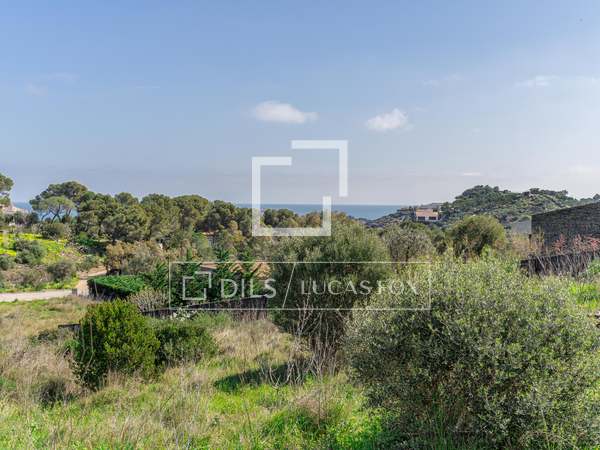
For further information on this property, call Lucas Fox on 00 34 93 356 29 89 or visit www.lucasfox.com

Getting There
Easyjet offers daily flights from Barcelona to London, Bristol and Newcastle, and Ryanair flies from Girona to Liverpool, London, Bornemouth, Blackpool and the East Midlands. The Garforths offer a bed-and-breakfast service from September to May, as well as self-catering lets (00 34 972 576 264) in summer.

Catalonia's Chianti Country - Country Life, March 21, 2006. [ PDF doc. : 1.92 Mb ]

Spain’s Architectural Jewel - Country Life, March 14, 2006

Carla Passino

Carla Passino discovers that Barcelona is Spain's architectural jewel which has it all, from ancient to modern.

Like a giant Koh-i-Noor, Barcelona sparkles under a crisp winter sky. From the lush slopes of Mount Tibidabo, the sun bounces off 600 years of architecture, framing the whimsical shapes of the Eixample's Modernist buildings, sliding down the medieval streets of the Barri Gòtic, and playing against the Diagonal Mar's skyscrapers, before drowning in a dazzling blue sea. Although expats account for the bulk of foreign demand, Barcelona also has a lively market for second homes. Add to this the effect of the Euro, a thriving economy and active local demand and it is easy to see why prices have skyrocketed over the past few years.

'Barcelona has seen a growth of between 15% and 25% a year,' says Stijn Teeuwen of local estate agent Lucas Fox (00 34 933 562 989). The outlook for the future looks somewhat calmer, but Mr Teeuwen still expects an annual growth of 10% to 15% over the next three years.

Property has appreciated at a particularly crazy rate in the tiny Old Town, which is most prized by international buyers. At its heart lies the Barri Gòtic, a maze of narrow streets lined with tall buildings dating from the Middle Ages through to the 19th century. Before the 1992 Olympics, this was a fairly unhealthy place to live, but gentrification has progressed at a fast pace. 'This area was a disaster for about 120 years, but now look at it,' says Gaynor Puig, a British antique dealer who lives on the lower reaches of the Gòtic. 'Luxury apartments are being built and the old Post Office is becoming a five-star hotel.'
Moving to either side of the Gòtic, buyers trade centuries of history for some of the world's most extraordinary architecture. South-west of the Old Town lies the Sant Marti district; a former industrial area, it has been transformed Docklands-style in the past 10 years. Sant Marti now ends in the ultra-modern Diagonal Mar, a luxury high-rise development with private pools and jaw-dropping views.

North of the Old Town, the Eixample was built between the mid-19th and early 20th centuries. It became popular with affluent Catalans and Modernist architects, and it is here that Antoni Gaudì created some of his most celebrated designs—from the seascape-inspired Casa Battleto the curvy façade of Casa Mila.

Foreigners favour the bottom streets of the borough, close to Placa de Catalunya. Slightly further north, the Golden Quadrangle is much sought after among the locals. The only drawback is that prices across the Eixample are steep. 'For €1.5 million, you get a good apartment of 1,600sq ft around Paseo de Gracia,' says Alexander Vaughan from Lucas Fox.

Some of Barcelona's grandest houses are set miles away from the Eixample at the foot of Mount Tibidabo. This area is so much further up than the rest of the city that it still keeps a rural feel. Houses here rarely make it onto the open market and tend to be on the enormous side. The Tibidabo is the preserve of affluent locals rather than foreigners. But if you ever saw the many facets of Barcelona gleaming at your feet, this is where you'd want to live.

Entering Gaynor Puig's flat, in the Barri Gòtic, is like stepping into an architectural textbook, starting with the floral motifs of the Modernist sitting room. The master bedroom is sober by comparison, with its duck-egg blue walls and Napoleon III mouldings. But the centrepiece is the huge Louis XIV drawing room—a triumph of gilded stucco and marbled walls, crowned by a fresco by Catalan artist Reynes. Mr Puig is also adding a new en suite bedroom which will open onto a roof terrace overlooking the church of La Merce. Lucas Fox (00 34 933 562 989), €1.3 million.

Set on the Carretera de Vallvidrera al Tibidabo, north Barcelona, the Castillo closely resembles Antoni Gaudi's Parc Guell. Built by one of his students, the 16,000sq ft mansion has many reception rooms. Outside, the main terrace is openly modelled on Parc Guell, with mosaic-covered benches and a jellyfish sculpture. The Castillo needs complete restoration but many of its original features remain intact. Lucas Fox (00 34 933 562 989), €4.2 million.

Spain’s Architectural Jewel - Country Life, March 14, 2006. [ PDF doc. : 161 Kb ]

Featured Location : Barcelona - Kyero, April 11 2006


Barcelona is one of the world's most dynamic cities, with a rich blend of cultural delights and 24 hour hedonism. It's situated between the Costa Brava and the Costa Daurada, which is a rugged and beautiful region, located on Spain's north eastern tip. The Catalan capital, Barcelona resides on a coastal plain that stretches away into the hills beyond, and blesses the city with breathtaking views.

Journey up the coast and you'll discover long, sandy beaches and rugged clifftops, while inland there are mountains, plains, marshlands and forests. As well as offering boisterous beach resorts that cater to the bucket and spade brigade, the coastal area is also sought after for its secluded coves and villages. Most notably, of course, the region is home to the cosmopolitan city of Barcelona, famed for its cultural heritage, as well as its party atmosphere.

The city displays a mix of traditional and contemporary architecture, the modernistic Sagrada Familia, resting happily alongside Barcelona's gothic cathedral. Down by Port Olympic, you'll find an amazing city beach, La Barceloneta, while on the Rambla you can partake of some tasty tapas while sipping Cava and watching the rest of the world pass you by.

Why Barcelona?

The Costa Brava may not offer the year round sunshine of the southern Costas, but life here is quieter, and the Catalonians would say it's more refined. Should you choose, you can avoid the overcrowding and enjoy the space and solitude of the quieter coastal villages around Barcelona. There's also plenty of property to be had in the city centre too. There are many reasons why Barcelona would make an exciting home, it's packed with fabulous architecture and offers a great nightlife, while the cost of living is considerably lower than the UK. The people are friendly, the food and wine mouthwatering, and the mountains are only 30 minutes away. In fact, the Catalans are very proud of the region's mar i muntanya (sea and mountains).

The city is also regarded as a shopping capital, and there are numerous chic boutiques and shopping centres. Barcelona is also one of the few European cities that can rival the Italians in the culture stakes. It's home to some of the finest galleries and museums in the world, with works from artists such as Gaudi, Miro, Dali and Tapies, to name but a few.

Other noteworthy attractions are Parc Guell, Gaudi's surreal gardens; the Joan Miro Foundation; Montserrat monastery; the Barri Gotic (Gothic Quarter); Montjuic hill, which can be reached via cable car; the Museu Picasso and Gaudi's Casa Mila, with its undulating facade and sculptured chimneys.

Ease of accessibility is another plus point, and Barcelona offers excellent access and infrastructure routes. A new high speed train link, which runs from the south of France through to Girona and Barcelona, is currently being built, and the city is accessible via three airports (Barcelona, Girona and Reus), which are serviced by numerous budget airlines.

The food and wine are also fabulous; eating out is a serious business. Choose from Michelin starred restaurants or indulge amongst the delightful tapas bars tucked away in one of the many cobbled side streets - either is sure to delight your taste buds. Freshly caught fish and seafood are central to the diet, and fresh vegetables, fruit, garlic and olive oils feature extensively. In terms of wines, Catalonia produces some superb tipples, most notably Cava, produced in Penedes, while the regions of Priorato and Alella export some rich reds.

Where to buy

Prices and properties vary dramatically throughout Barcelona, depending on where and what you buy. The most expensive areas are to the north and west of the city, where villas and townhouses can be found. In the city centre, you'll generally only find apartments for sale, with loft conversions becoming increasingly popular.

Areas experiencing the most demand from foreign buyers are the Ciutat Vella (Old Town) and L'Eixample. Ciutat Vella dates back to medieval times, and takes in the areas of Barri Gotico, El Bourne and El Raval. Most apartments here are unique and the area enjoys a fabulous ambience, with bars and restaurants on every corner and easy access to the beach and Port Vell. It's still possible to find a good renovation project in the Old Town that offers good rates of appreciation, but the starting price is considerably higher than it was a few years ago.

L'Eixample is one of Barcelona's newest districts. Literally meaning 'extension' in Catalan, the city expanded into this district during the 19th century. A network of smart streets and squares, this lively area is an interesting mix of modernist and traditional. Consisting mostly of apartment blocks, the start of the district is marked by the Placa de Catalunya, making this a central and highly popular area. With an amazing choice of shops and restaurants, this is a great place to live, think Kensington or Knightsbridge.

Outside of Barcelona, the Maresme coast stretches north of Barcelona and consists mostly of villas. The Costa de Maresme is lined with long beaches and enjoys a mild, temperate climate. Extremely expensive, the average property starts at €123,000 and there are many properties on sale for upwards of €1,000,000.

Table of contents

Property search


Saved Properties