Featured properties
Articles in which Lucas Fox Portugal has been featured
Index of Articles
- 'Now it's beginning to happen' - Financial Times - House & Home, 12th April 2008
- Press Release - Lucas Fox Portugal opens new office in central Lisbon - 19th November 2007
- Out of the Shadows - Homes Overseas Magazine, Nov 2007
- Lisbon: a coastal gem where prices haven't boomed - The Independant - June 13th 2007
- Seven hills of coastal elegance, Financial Times - March 9th 2007.
- Beauty and the Beach – The Independent, 13th Dec 2006
- Capital Opportunity – Easyjet In-flight Magazine, December 2006
- In a League of its Own - The Times, Bricks and Mortar Supplement, 18 Aug 06
'Now it's beginning to happen' - Financial Times - House & Home, 12th April 2008
FT REPORT - HOUSE & HOME: 'Now it's beginning to happen'
By Simon Brooke
Published: Apr 12, 2008
When the recession of the late 1980s struck in Britain, photographer Kenton Thatcher did what so many freelance workers did when they found their order books drying up - he left London with its economic problems and high living costs and went abroad. In Thatcher's case his destination was Lisbon, a city he already vaguely knew.
"I thought I'd go for six months just to get some shots for my portfolio and then come back but six months turned into a year, which turned into six years and I've been here ever since," says Thatcher, whose clients include the Pirelli calendars and Tag Heuer watches.
The neighbourhood of the Portuguese capital he moved into was Santos, a former industrial zone. The area became the site for a design school, the Instituto de Artes Visuais, Design e Marketing - commonly known as Iade - nearly 20 years ago but over the past few years it has been attracting not just students but designers and architects. A supply of young creative talent, along with large office spaces at very affordable rents, has proved to be quite a pull for the creative industries, ranging from furniture designers and architects to computer graphics artists.
"In London I was living in Old Street, where there were creative industries working out of former industrial premises and I think that was part of the appeal of Santos for me," says Thatcher.
Near Lisbon's docklands area, neighbouring districts include Lapa, with its smart homes and embassies, and Estrela, a pretty and very desirable but slightly less expensive area.
Buildings in Santos range from 19th- century warehouses to older apartment blocks. Some, complete with French windows and wrought-iron balconies, date back more than 250 years to when the great earthquake of 1755 resulted in much of the city being rebuilt.
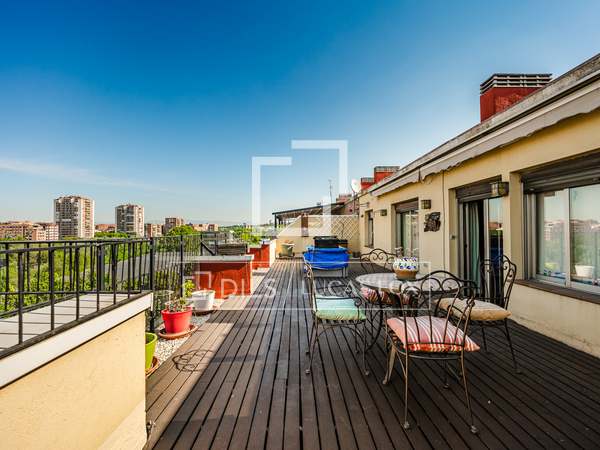
Alongside these classic buildings are plainer, more functional 20th-century apartment blocks and light industrial workshops. Towards the docks themselves the area naturally becomes rougher - but for many of Lisbon's hip young crowd this edginess has been part of the appeal.
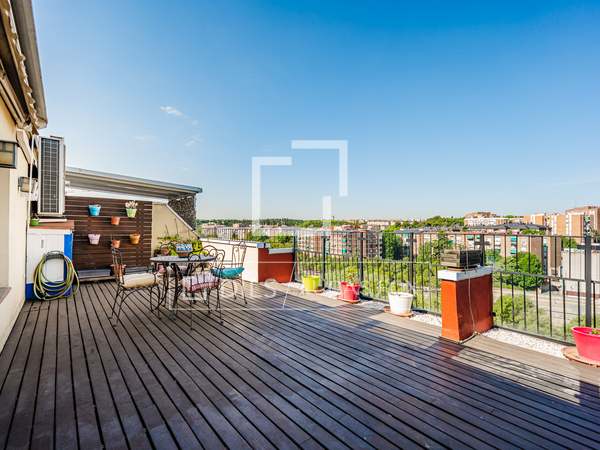
For many years the area was considered slightly dangerous with a wild nightlife, says Christina Hippisley, until recently a Lisbon resident. "Santos has reinvented itself as a funky area full of nightclubs and restaurants and, latterly, designer furniture shops showcasing Portuguese products, and art galleries," she says. "These days there are around 4,000 students studying design, architecture, illustration and the audio-visual arts in some of Portugal's cutting-edge design colleges, which have been set up in old warehouses and factories."
The real impetus for change came in 2005 when the area was rebranded by a group of local design businesses, interiors shops and smart restaurants as "The Santos Design District", complete with website and unofficial marketing operation.
When it opened, the local branch of Armani Casa was something of a trailblazer but many of the shops are one-off stores owned and managed by Port-uguese designers and retailers. Outlets such as Santos de Casa focus Portuguese talent while Paris-Sete is where residents can find homewares by names such as B&B Italia and Vitra in an airy, neo-industrial setting.
"Santos is very much the place for designers to show their work in Lisbon these days - there is nowhere else quite like it," says furniture and interior designer Tereza Prego, whose pieces are appearing in a recently opened shop. "Every month the design shops are open until 10pm [one night] and people come and look around, have a drink and then go to eat in one of the restaurants. This event, which was initiated by the Santos Design District group, has made a big difference in the area."
There is little local government involvement compared, for instance, with London's Covent Garden or Docklands, where a background for new homes, shops, offices and restaurants was created. In Santos, the infrastructure has been little altered and developments have been more organic.
"The changes have been slow and there hasn't been as much of a collaborative effort as with some redevelopments but clearly the area has potential," says John Chamberlain, a British architect who has lived and worked in the area for more than 30 years. "It's been on the verge of coming up for years but now I think it's beginning to happen. It's got some good public spaces and an interesting variety of architecture."
Property prices in Lisbon have been "solid", with growth at about 2.4 per cent and rental yields of 5 to 6 per cent, according to Adrian Medd. "Opportunities for growth continue to exist in the prime city areas where there is urban redevelopment - hence the growing importance of the historic areas of Lisbon where there are good quality projects," says Medd. A new high-speed train link between the Portuguese and Spanish cities, well as a new Lisbon airport, will also stimulate growth.
Thatcher is one of a small number of "Beefs", as Brits are affectionately known, to buy in the area. His 200 sq metre, three-bedroom apartment, which includes his photographic studio, cost €150,000 although he recently had it valued at €500,000.
"It has got four-metre-high ceilings and it was built after the great earthquake," he says. "It was an apartment block for servants who worked in a palace that stood nearby and the walls here are nearly a metre thick in places, which is great for soundproofing."
He says the cost of living is so much lower than in the UK, especially London. There are cafés and bars outside the apartment that he shares with his partner and baby and the beach is a 20-minute drive out of Santos. He bought an investment property nearby.
"Even in Santos, the local government is very particular about developments and alterations and the police on their scooters are on the lookout for people doing things without permits so you have to be careful about what you do," he warns.
The Portuguese are traditionally buyers rather than renters. The purchase process in Lisbon, like most of Portugal, is relatively simple. After verifying the ownership of a property, a sale then involves a promissory contract with details of the property, purchaser and vendor. Once signed, this becomes binding on both parties.
Foreign nationals wanting to buy also need to appoint a fiscal representative to handle tax issues. A deed of transfer is later drafted and signed by both parties in the presence of a notary. The new owner of the property is then registered at the land registry.
A recent change in the law boosting landlords' rights over tenants is expected to fuel an increase in levels of buy-to-let investment. Paul Houston of estate agent Lucas Fox has just sold a one- bedroom apartment in a recently restored building in Santos for €150,000; its new owner plans to rent it to tourists.
Lucas Fox also has new apartments with river views for sale. One- and two- bedroom properties start at €355,000. "There's quite a range of building styles here, some from the 1970s and 1980s, but the period properties are usually the most attractive and sought after now," says Houston.
Although Santos's transition has been slow, the gentrification process could be accelerated by a new development from British architect Norman Foster, currently going through the planning process. This 65,000 sq metre development will include homes, shops, restaurants, arts spaces and a hotel. It will also be environmentally friendly and its centrepiece will be a tower paying homage to the Campanile in St Marks Square in Venice.
Miguel Stanley, whose heritage is British, South African and Portuguese, bought a penthouse apartment in a 200-year-old building in one of the area's broad avenues in 2004. He paid €500,000 for 2,000 sq ft, with three bedrooms and two terraces, and has recently had it valued at nearly €1m.
"Santos used to be the place people came to for nightlife but now that same energy and style is being expanded with the growth of the creative industries and cool shops and restaurants," says Stanley, who himself personifies the district's creative dynamism - a practising dentist, he also produces a make-over show on Portuguese television. "Santos still has a way to go but things are moving faster here than ever before. I've known the area more than 15 years and seen the changes taking place but there is real buzz here now."
Press Release - Lucas Fox Portugal opens new office in central Lisbon - 19th November 2007
International real estate company Lucas Fox (www.lucasfox.com) are pleased to announce that their Portugal business – LFPT Mediação Imobilária, Lda AMI 7958 trading as Lucas Fox Portugal has recently opened a new office in central Lisbon. ¨
Lucas Fox Portugal will offer a complete service to the growing number of foreign buyers seeking properties in the historic and chic capital city of Lisbon and the exclusive and beautiful surrounding areas of Cascais, Estoril and Sintra.
Lucas Fox Portugal’s primary focus will be on city apartments and investment properties in Lisbon. It will also offer a broad portfolio of coastal properties in Cascais & Estoril, and a range of properties inland from traditional stone country houses (known locally as Quintas), to modern golf course developments. Lisbon is fast becoming a popular choice for those looking to invest in property or own a second home abroad. Lisbon was recently voted the 5th most popular city break destination in Europe and saw tourist numbers increase by 25% in 2006. This trend looks set to continue as Lisbon steadily climbs the ranks of European cities that must be visited, making it a good prospect for those seeking a rental investment.
The UN World Heritage site of Lisbon offers a quieter and, some would say, more authentic lifestyle than many other European cities. Make no mistake though, there’s plenty going on in this city, including shopping, nightlife and cultural events. For investors the draw is Lisbon’s status as a an ‘undiscovered ‘ destination. Property prices are still among the most affordable in Western Europe, having experienced appreciation that, without the upwards-driving influences of overseas investors, has not risen much above inflation.
“Expect a two bedroom apartment to comprise around 90 square metres of living space” says Paul Houston of Lucas Fox Portugal, “although there are plenty of smaller apartments, at around 50 square metres available.” In terms of areas Houston recommends Avenida Liberdade: “This is as close to London’s Bond Street as you’ll get in Lisbon; running from the business district to the city centre, it’s a tree-lined boulevard where you’ll find a decent selection of high-end labels and designer stores”.
“The Barrio Alto is a popular area with buyers”, says Houston, “particularly with the younger ones. It’s a lively and bohemian area, with a number of trendy shops, bars and restaurants. Prices in this neighbourhood are on average around €3000 per square metre”. Similarly priced properties can be found in the Castelo area which is near the Castelo de San Jorge perched on top of one of Lisbon’s seven hills and therefore offering a number of properties with great views across the city and river. “The city essentially grew from this area so it has all of the benefits of being one of the oldest parts of the city with bags of charm and narrow cobbled streets” says Houston.
More expensive properties can be found in super desirable Chiado which is popular with the fashion and media set. “Here you’ll find beautiful buildings, with high ceilings and large windows, plus a good assortment of stylish shops and bars” says Houston. “The area has the adavantage of being quiet, yet close to everything”.
The benefits of the areas surrounding Lisbon are clear to see as they bustle with life all year round, have fantastic weather, many beautiful beaches, historic monuments, and great food and wine. These areas can easily compete with the Algarve in terms of golfing facilities as well as other leisure pursuits such as sailing and horse riding.
Founded in 2004, Lucas Fox has fast become one of the most successful Estate Agencies operating in Barcelona and the Catalonia region of Spain. The launch of Lucas Fox Portugal is the company’s first move into a new country. “The new office for Lucas Fox Portugal is an important step in the company’s development. There are a limited number of agencies operating in the area who, like Lucas Fox, exclusively target an international audience so we offer both buyer and vendor an attractive USP,” said Alexander Vaughan of Lucas Fox. “With the level of foreign investment continuing apace, I believe that the Lisbon region of Portugal represents an extremely attractive market for the Lucas Fox business,” he added.
International real estate company Lucas Fox (www.lucasfox.com) specialises in offering quality properties, a professional approach and a high level of service. This formula has proved to be very successful in Barcelona and Catalonia and is now being replicated in Portugal.
For more information please contact Paul Houston, Lucas Fox Portugal (LFPT Mediação Imobilária, Lda). Lucas Fox Portugal – +351 91 45 23 739, info@lucasfox.com, www.lucasfox.com
Lisbon: a coastal gem where prices haven't boomed - The Independant - June 13th 2007
By Laura Latham
Published: 13 June 2007
Judge it against whichever capital city you choose – for a cosmopolitan holiday destination, Lisbon ticks all the boxes. It has prime waterfront, beautiful palaces, ancient winding streets and a lively cultural heart.
All of which makes it a mystery as to why, when it comes to investment, it has been largely ignored. While comparable cities such as Barcelona have soared in popularity and price, Lisbon has remained steady. Quietly and calmly, she has been improving her prospects without losing any of her flavour.
Now, Lisbon is starting to appear on the property radar thanks to increases in tourist numbers and the few high-end agents that have started to sell there.
Lucas Fox is one of the first agents to scout out the city, and Paul Houston, who runs the local office, thinks Lisbon's time has come. "We've been getting a lot of interest lately," he says. "We've seen a lot more visitors, tourist numbers are up, even through winter. That interest then trickles down into property – people come here and fall in love with it. Plus, prices are competitive compared with other capitals."
He says that average prices in the nicest areas of town are around £2,000 to £2,380 per square metre (less than a quarter of what you pay in prime central London and half what you might pay in Paris or Madrid), but prices of £1,360 are not unusual in less sought-after areas. "Renovation projects in character apartments with stunning views cost on average £2,176 per square metre," says Houston, "and that's fully refurbished, everything new."
Lisbon is full of dilapidated palaces that are being targeted for restoration and conversion. These are fabulous, but at around £400,000 for two bedrooms, they won't be the cheapest you can find. Instead, Lucas Fox currently has several attractive apartments costing less than £120,000.
On Houston's books, there is a cosy studio with river views priced at £95,000. He also has a pretty one-bedroom loft in a quaint side street for £112,000 and a lovely two-bed with great city views on the edge of Barrio Alto for £115,650. For upwards of £170,000, apartments get better located with more space and possibly an outside terrace or courtyard.
Connie Vitto of Quadrant Overseas also ranks Lisbon as one of Europe's best buys. She says that if you want a bolthole in a beautiful city, you can find studios for less than £100,000, and she recently sold a 50-square-metre conversion in Barrio Alto for £90,000. Currently, Vitto has a four-bedroom apartment in need of refurbishment for £140,000, and a lovely one-bed with lots of outside space in the sought-after Lapa district for £160,000.
"Lisbon is fabulous," she says. "It's beautiful, small enough to get around, transport links are improving, you can eat well and the people there know how to party."
Lisbon is built across several hills with each of its districts offering a different perspective on the city. Paul Houston says the best areas to look in are the Castelo (castle) district, Baixa (downtown), lively Rossio and genteel Chiado. He also mentions the Barrio Alto (old town), which is up and coming.
"It's a very manageable city," says Houston. "The centre is only about two kilometres across. It's good for tourists if you're planning to rent out your property." Renting will net you on average £55 to £70 per night in a decent one-bed apartment, but your main tenants will be short-term. Long-term contracts, usually one or two years, will bring in around £680 per month.
What is enticing people to live and visit is the increase in regeneration. Everywhere you look, Lisbon is getting a facelift. Buildings are being cleaned up and a new transport system is going in. A high-speed rail link from Lisbon to Madrid was recently approved.
"Lisbon still has its local bars and shops. The people here haven't changed and there is still a sense of the real Portugal in the streets and cafés," he says. "It's a good mix, and that's what appeals."
Lucas Fox: www.lucasfox.com; 00 351 91 45 23 739Quadrant Overseas: www.quadrant-property.com; 01276 507 513
Buyers' guide
* House price rises in Lisbon have been barely above five per cent per annum recently. This is very low in comparison to the annual growth of 15 per cent seen in Brussels and Paris, or central London's 30 per cent jump.
* Though Lisbon is considered pretty safe, it still has some dodgy pockets, even in central areas.
* Some of the shabbier downtown areas are soon to be cleaned up and regenerated. Property agents predict that prices will increase around these locations once this is done.
* Parking is a problem, and apartments with spaces sell are at a premium. Typically they can add around £20,000 to the value.
* * *
Seven hills of coastal elegance, Financial Times - March 9th 2007.
By Sonia Purnell
Published: March 9 2007 15:05 | Last updated: March 9 2007 15:05
Legend has it that the ancient name for Lisbon, Olisipo, was given by the Greek hero, Ulysses, who paused there on his voyage to seduce the nymph Calypso. Heartbroken at his departure, she changed herself into a serpent whose coils formed the seven hills of the Portuguese capital.
Today, those slopes, rising from the Tagus river, make Lisbon one of the most interesting cities in Europe. They’re stacked with pretty rows of tiled roofs and pastel-painted palaces that tumble down into the neo-classical palm-lined splendours of the Baixa, or lower, part of town. With its beguiling tawny light, seaside location, active street life and cultural attractions – soon to be enhanced by the outstanding Berardo modern art collection – the city regularly draws comparisons with Barcelona and is now the fifth most popular city in Europe for mini-breaks. But without the kick-start of an event, such as the Barcelona Olympics, or a surging national economy, Lisbon’s potential as a property market has by contrast been overlooked.
The result is that apartments – even in some of the finest buildings in what is an elegant, largely 18th-century city centre – are still extraordinarily cheap. The average cost of a city centre Lisbon apartment is just €1,494 per sq metre, for instance, compared to Barcelona’s €3,482 and even Warsaw’s €1,494. “It’s still possible to buy a reasonable apartment in a good area for the equivalent of £100,000,” says Robert Pierce of the buying agency Property Finders. “Spend twice that and you’ll get something really serious.”
Indeed, a spacious 130 sq metre apartment in an old palace in Baixa, with views over the Se cathedral and a wonderful enfilade of rooms, is on the market for just €360,000 through Lucas Fox. It has beautiful original 18th century tiles on the walls and is just a short walk to the atmospheric Moorish district of Alfama and the chic shopping and dining quarter of Chiado. World-class surfing, both the traditional as well as the wind and kite varities, is just a short hop away on some of Europe’s finest beaches. Also nearby are eight championship golf courses and some glorious countryside.
The Baixa area, created in a single decade by the dictatorial minister the Marques de Pombal in the wake of the Great Earthquake of 1755, has been lavished with European Union-funded face-lifts over the past few years. Keen to do more to encourage investment, the Portuguese government also recently suspended all residential property purchase taxes in Baixa, for both foreign and domestic investors. Still, the city has an intimate atmosphere not found in many other capitals. “It’s a smaller, friendlier and cosier place than Barcelona,” says Jerry Harris, a Briton who moved to Lisbon with his wife and small children. His estate agency, Abacus, has just joined forces with Savills to market the city and surrounding area to buyers abroad. “I live in the centre of town, where it’s a very café society and extremely safe for children. We go to cafés and restaurants and the children just run round.”
Up on the Bairro Alto hill to the left, best reached by funicula, is a different scene. Jumping with life on a Friday and Saturday night, the narrow streets are packed with boites and a string of good jazz venues. Living here is best for nocturnal types, although the quieter nearby streets of Chiado command wonderful views and the highest prices in Lisbon, at an average of about €4,500 per sq metre, up from €3,000 in just three years but still much lower than the prices of up to €9,000 found in equivalent areas of Barcelona.
Cheaper than Baixa is Alfama, where some of the old Moorish streets are not much wider than a man’s shoulders and all thoughts of parking should be abandoned. Oozing medieval charm, apartments here rarely come on the market but when they do even a well-renovated two-bedroom flat can cost as little as €250,000.
Another funky area is Alcântara, where the old suspension bridge comes into the city and loft apartments are appearing in formerly derelict warehouses. Marinas, fringed by trendy restaurants and cafés, are attracting a younger crowd and easy access to the bridge means that the beaches are only a few minutes away.
Savills is not the only agency to set up shop in Lisbon recently in response to increasing interest from foreign buyers. Lucas Fox has until now focused on Barcelona and the surrounding Catalonia region of Spain but selected Lisbon for its first outside foray because it shares so many qualities with the agency’s home market. Alex Vaughan, partner, predicts that it is only a matter of time before the Portguese city takes off like its Spanish counterpart.
Already the Spanish, faced with a maturing market at home, are buying into the new developments in satellite beach-towns of Lisbon, such as Estoril and Cascais, and converting old city-centre office blocks for residential use. “They know that prices here are half those at home, where they’re €6,000 to €10,000 per square metre. But they also know that that’s going to change,” says Paul Houston of Lucas Fox. “The capital is also drawing in Portuguese money too, as the recently opened railway to Algarve has allowed people to live in the city centre and be at their weekend home in the Algarve in two rather than four hours.”
North European buyers are also shifting their attention from Portugal’s south. Half of one recent Cascais development was snapped up by Britons. Another nearby development at Pinhal de Charneca, just 1km from the surfing beach of Guincho, is also expected to attract foreign investment. The 41 four- to five-bedroom townhouses – traditional quinta in style on the outside, contemporary on the inside, with two communal pools and landscaped gardens – are on the market for €500,000 through Lucas Fox.
Wim Crapts, from the Netherlands, originally wanted to buy in Barcelona but saw far better opportunities in Lisbon. Now living in Cascais, he has seen prices steadily increase, at about 5 per cent a year for mid-market properties and twice that at the top end. “The Olympics meant that Barcelona was already a mature market,” he explains. “Here in Lisbon, you’re going to have the same thing happening but with the advantages of fewer people, a better climate and better beaches and no mass tourism. In the eight years since I’ve been here, Lisbon has beome so much more cosmopolitan and is now being discovered by northern European tourists and investors while remaining popular with the Portuguese.”
Lisbon’s growing stature as an international pharmaceutical research centre – with global giants such as SmithKline Beecham setting up large operations – has also helped. Gillette, Microsoft and Vodafone have also moved into the new business parks, attracting scores of well-paid international executives with healthy bank accounts. “Many ex-pat managers now want to stay here,” says Charles Weston-Baker of Savills. “We sold a €2m house here to one of them only last week.”
■Lucas Fox, tel: +351 914 523 739, www.lucasfox.com
http://www.ft.com/cms/s/32be3c44-ccd5-11db-a938-000b5df10621.html
Copyright The Financial Times Limited 2007
Capital Opportunity – Easyjet In-flight Magazine, December 2006
This article is available as a PDF download.